Top Password Managers to Protect Your Online Identity in 2025 🔐
Let’s be honest – we’ve all been there. You’re trying to log into that account you created months ago, and you’re cycling through your usual password variations, hoping one of them will work. “Was it password123 or Password123!?” Sound familiar? 😅
In today’s digital landscape, where the average person has over 100 online accounts, relying on memory or simple passwords is like leaving your front door wide open. Cybercriminals are getting smarter, data breaches are becoming more frequent, and your “secure” password probably isn’t as bulletproof as you think.
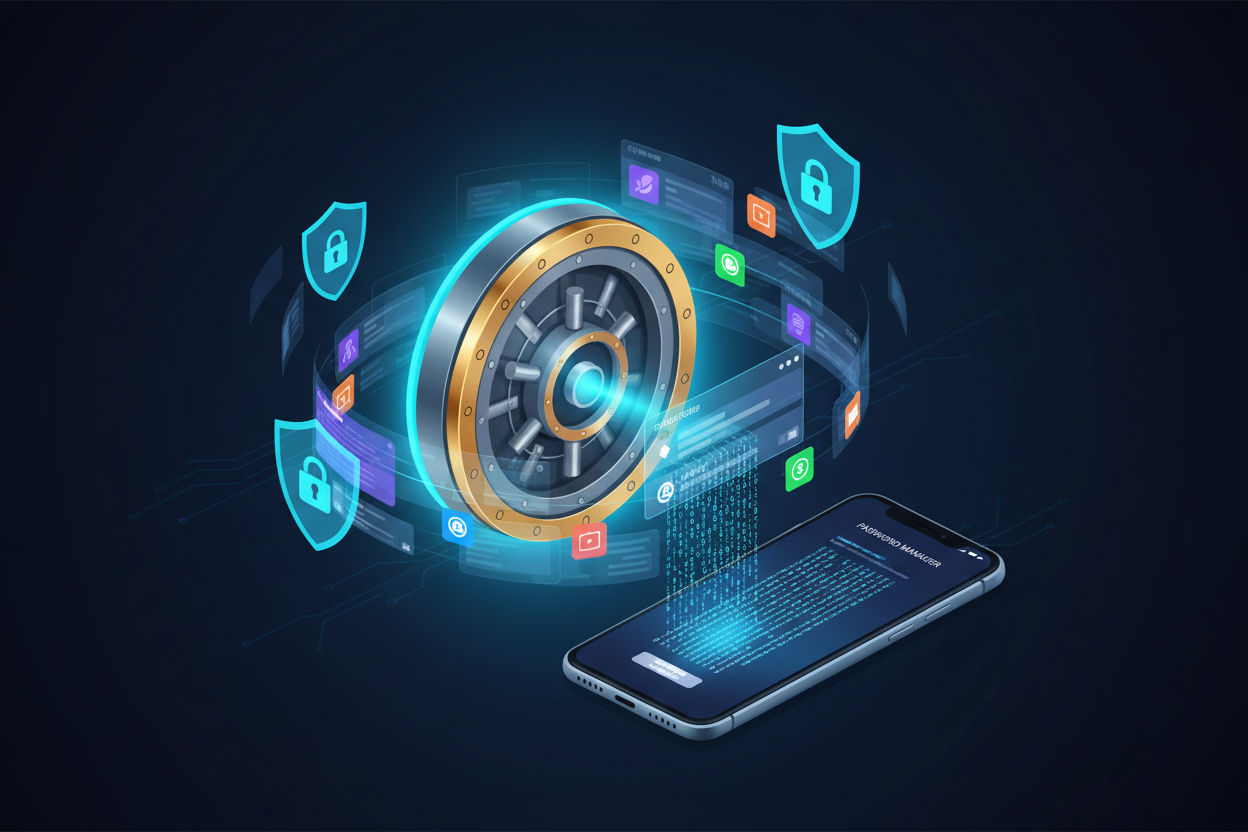
That’s where password managers come to the rescue. These digital guardians don’t just store your passwords – they generate uncrackable ones, autofill your login credentials, and keep your online identity locked down tighter than Fort Knox. In this comprehensive guide, we’ll explore the best password managers of 2025 that can transform your chaotic digital life into a seamlessly secure experience.
Table of Contents
• Why You Need a Password Manager in 2025
• Top 8 Password Managers for Maximum Security
• Key Features to Look for in a Password Manager
• Setting Up Your Password Manager: A Quick Start Guide
• Common Password Manager Myths Debunked
• Frequently Asked Questions
• Conclusion
Why You Need a Password Manager in 2025 🚨
The statistics are sobering. According to recent cybersecurity reports, over 4.5 billion records were exposed in data breaches last year alone. Meanwhile, 81% of data breaches are caused by weak or stolen passwords. If you’re still using “123456” or your pet’s name as your password, you’re essentially rolling out the red carpet for hackers.
But here’s the thing – creating and remembering unique, complex passwords for every account is humanly impossible. That’s not a personal failing; it’s just reality. Password managers solve this fundamental problem by becoming your digital memory bank, generating fortress-like passwords and remembering them so you don’t have to.
Beyond password storage, modern password managers offer features like dark web monitoring, secure sharing, and breach alerts. They’re not just tools; they’re your personal cybersecurity team working 24/7 to keep your digital life safe.
Top 8 Password Managers for Maximum Security in 2025 🏆
1. Bitwarden: The Open-Source Champion
Bitwarden has earned its reputation as the people’s champion of password managers, and for good reason. Its open-source nature means security experts worldwide can inspect and verify its code, providing transparency that proprietary solutions simply can’t match.
What sets Bitwarden apart is its generous free tier – you get unlimited password storage, sync across all devices, and access to core security features without spending a dime. The premium version, at just $10 annually, adds features like encrypted file storage, advanced two-factor authentication, and priority support.
The interface is clean and intuitive, making it perfect for both tech novices and security enthusiasts. Bitwarden’s browser extensions work flawlessly, and the mobile apps are responsive and reliable. For families or businesses, their organization plans offer secure sharing and admin controls that rival enterprise solutions.
2. 1Password: The User Experience Master
If password managers were smartphones, 1Password would be the iPhone – polished, intuitive, and designed with user experience as the top priority. The interface is gorgeous, with smooth animations and logical organization that makes managing hundreds of passwords feel effortless.
1Password’s standout feature is its Travel Mode, which temporarily removes sensitive data from your devices when crossing borders – a godsend for frequent travelers concerned about device searches. The Watchtower feature continuously monitors for compromised passwords and sends alerts when your credentials appear in data breaches.
At $2.99 monthly for individuals or $4.99 for families, 1Password isn’t the cheapest option, but the premium you pay translates into exceptional build quality and customer support. Their family sharing features are particularly well-designed, making it easy to securely share Netflix passwords without compromising bank account access.
3. Dashlane: The Feature-Rich Powerhouse
Dashlane approaches password management with a “kitchen sink” philosophy – if there’s a security feature you might want, they probably have it. Beyond standard password management, Dashlane includes a built-in VPN, dark web monitoring, and identity theft protection.
The password health score is brilliant, analyzing your entire password collection and providing actionable recommendations for improvement. Dashlane’s form-filling capabilities are among the best in the business, accurately completing complex checkout forms and registration pages.
While Dashlane’s free tier is limited to 50 passwords on a single device, the premium plans ($4.99 monthly) unlock unlimited storage, sync across devices, and access to all security features. For users who want comprehensive digital protection beyond just passwords, Dashlane delivers exceptional value.
4. Keeper Security: The Enterprise Favorite
Keeper Security has built its reputation in the enterprise world, and that enterprise-grade security trickles down to benefit individual users. Their zero-trust security model means even Keeper can’t access your data – everything is encrypted locally before it ever leaves your device.
The standout feature is BreachWatch, which continuously monitors the dark web for compromised credentials and immediately alerts you if your information appears in any data breach. Keeper’s secure file storage is generous, allowing you to store important documents alongside your passwords.
At $2.92 monthly, Keeper offers competitive pricing for premium features. The interface isn’t as polished as some competitors, but it’s functional and reliable. For users prioritizing maximum security over aesthetic appeal, Keeper is an excellent choice.
5. NordPass: The Newcomer with Serious Credentials
NordPass leverages the security expertise of NordVPN to create a password manager that punches above its weight class. Built on the XChaCha20 encryption algorithm – considered more secure than the industry-standard AES-256 – NordPass takes security seriously.
The user interface strikes a perfect balance between simplicity and functionality. Password generation is seamless, and the browser extensions integrate smoothly with popular browsers. NordPass also includes a handy password health checker that identifies weak, reused, or compromised passwords.
With a free tier that supports unlimited passwords on one device and premium plans starting at $1.49 monthly, NordPass offers exceptional value. The family plan ($2.49 monthly) includes six accounts and 1GB of encrypted file storage, making it perfect for households transitioning to better password security.
6. LastPass: The Veteran (With Recent Improvements)
LastPass has had a rocky few years with security incidents, but they’ve used those challenges as motivation for significant improvements. The platform has undergone extensive security audits and architectural changes to regain user trust.
Despite past issues, LastPass remains popular due to its mature feature set and extensive browser integration. The free tier allows unlimited passwords with sync across unlimited devices – a rarity in the password manager world. The premium version ($3 monthly) adds advanced features like encrypted file storage and priority support.
While some users have migrated to other platforms following the security incidents, LastPass has implemented robust security measures and maintains one of the most comprehensive feature sets available. For users comfortable with the platform’s history and improvements, it remains a viable option.
7. RoboForm: The Form-Filling Specialist
RoboForm has been perfecting password management since 1999, and their experience shows in their exceptional form-filling capabilities. If you frequently shop online or fill out complex forms, RoboForm’s accuracy and speed are unmatched.
The platform offers robust password generation, secure sharing, and multi-device sync. While the interface feels slightly dated compared to newer competitors, it’s functional and reliable. RoboForm’s desktop applications are particularly well-developed, offering features that browser-only solutions can’t match.
At $0.99 monthly for the first year (then $1.99), RoboForm offers excellent value for users prioritizing form-filling accuracy. The family plan ($1.98 monthly for the first year) supports five users and includes secure sharing features.
8. Apple Keychain: The iOS Integration King
For users deeply embedded in the Apple ecosystem, Apple Keychain offers seamless integration that third-party solutions struggle to match. Built into iOS, macOS, and iPadOS, Keychain syncs passwords across all Apple devices without requiring additional apps.
Recent updates have significantly improved Keychain’s capabilities, adding password breach monitoring, secure sharing, and improved password generation. The integration with Safari is flawless, and Face ID/Touch ID authentication makes accessing passwords effortless.
While Keychain lacks advanced features like encrypted file storage or comprehensive breach monitoring, it’s completely free and works beautifully within the Apple ecosystem. For iPhone users who primarily use Safari and don’t need cross-platform compatibility, Keychain is a solid choice.
Key Features to Look for in a Password Manager 🔍
Choosing the right password manager isn’t just about picking the most popular option – it’s about finding the solution that fits your specific needs and security requirements. Here are the essential features to consider:
Zero-Knowledge Architecture: This means the password manager company cannot access your data, even if they wanted to. Your master password is the only key to your vault, and losing it means losing access forever – which is actually a good thing from a security perspective.
Cross-Platform Compatibility: Your password manager should work seamlessly across all your devices – Windows, Mac, iOS, Android, and Linux. Look for solutions that offer native apps rather than just browser extensions.
Strong Encryption: AES-256 encryption is the current gold standard, though some newer managers use XChaCha20. Both are considered unbreakable with current technology.
Secure Password Sharing: Whether you’re sharing Netflix credentials with family or work passwords with colleagues, secure sharing features prevent passwords from being transmitted in plain text.
Breach Monitoring: The best password managers continuously monitor data breaches and alert you immediately if your credentials are compromised.
Two-Factor Authentication Support: Your password manager should support 2FA for its own access and help you manage 2FA codes for other accounts.
Setting Up Your Password Manager: A Quick Start Guide 🚀
Getting started with a password manager might seem daunting, but the process is straightforward. Here’s how to transition from password chaos to digital security zen:
Step 1: Choose Your Platform
Based on our reviews above, select the password manager that best fits your needs and budget. Most offer free trials, so you can test-drive before committing.
Step 2: Create a Master Password
This is the one password you’ll need to remember, so make it strong but memorable. Consider using a passphrase – a string of random words like “pizza-mountain-telescope-rainbow” is both secure and memorable.
Step 3: Install Browser Extensions
Download the browser extensions for all browsers you use. These will automatically capture and fill passwords as you browse.
Step 4: Import Existing Passwords
Most password managers can import passwords from browsers or other password managers. This gives you a head start on building your secure vault.
Step 5: Update Weak Passwords
Use your password manager’s security audit feature to identify weak or reused passwords, then systematically update them with strong, unique alternatives.
Step 6: Enable Two-Factor Authentication
Secure your password manager account with 2FA. This adds an extra layer of protection to your digital vault.
Common Password Manager Myths Debunked 🤔
Myth: “Password managers are a single point of failure”
Reality: While your password manager does become central to your security, the encryption ensures that even if the service is breached, your data remains protected. The alternative – weak, reused passwords – is far riskier.
Myth: “I can just use my browser’s built-in password manager”
Reality: Browser password managers lack advanced features like secure sharing, breach monitoring, and cross-browser compatibility. They’re better than nothing, but dedicated password managers offer superior security and functionality.
Myth: “Password managers are too complicated for non-tech people”
Reality: Modern password managers are designed for everyday users. Once set up, they’re actually easier to use than trying to remember dozens of passwords.
Myth: “Free password managers aren’t secure”
Reality: Several free password managers (like Bitwarden) offer excellent security. The difference between free and paid versions is usually features, not security quality.
Frequently Asked Questions 💬
Q: What happens if I forget my master password?
A: Most password managers cannot recover your master password due to zero-knowledge architecture. However, many offer emergency access features or account recovery options. Always set up these backup methods during initial setup.
Q: Can password managers be hacked?
A: While password manager companies can be breached, your encrypted data remains protected. Even if hackers steal encrypted password vaults, breaking the encryption would take centuries with current technology.
Q: Should I use the same password manager for personal and work accounts?
A: This depends on your company’s policies. Many organizations prefer employees use approved enterprise password managers for work accounts while allowing personal managers for individual use.
Q: How often should I change my passwords?
A: Modern security experts recommend changing passwords only when they’re compromised in a breach or if you suspect unauthorized access. Strong, unique passwords don’t need regular changes.
Q: Can I trust cloud-based password managers?
A: Yes, when they use proper encryption. Your data is encrypted locally before being sent to the cloud, meaning the service provider cannot access your passwords even if they wanted to.
Q: What’s the difference between free and premium password manager versions?
A: Free versions typically limit device sync, storage capacity, or advanced features like breach monitoring. Premium versions unlock unlimited sync, encrypted file storage, and priority support.
Conclusion: Your Digital Security Starts Today 🛡️
Choosing a password manager in 2025 isn’t just about convenience – it’s about taking control of your digital security in an increasingly dangerous online world. Whether you opt for Bitwarden’s open-source transparency, 1Password’s polished experience, or any of the other excellent options we’ve explored, the important thing is to start today.
Remember, the best password manager is the one you’ll actually use consistently. Don’t get paralyzed by trying to find the “perfect” solution – pick one that fits your needs and budget, then commit to using it properly. Your future self will thank you when you’re not frantically clicking “forgot password” for the hundredth time this year.
The digital threats of 2025 are real, but they’re not insurmountable. With a quality password manager as your first line of defense, you’re taking a crucial step toward securing your online identity. Start your password manager journey today, and transform your digital security from a source of stress into a foundation of confidence.
Stay safe out there, and remember – in the world of cybersecurity, the best defense is a good password manager! 🔐✨