
The Evolution of Cloud Gaming: What’s New in 2025 🎮
Remember when downloading a 100GB game meant leaving your console on overnight and praying your internet didn’t cut out? Those days feel like ancient history now. As we dive into 2025, cloud gaming has transformed from a futuristic concept into the backbone of how millions of gamers worldwide experience their favorite titles. The landscape has shifted dramatically, and honestly, it’s pretty exciting to witness this revolution unfold in real-time.
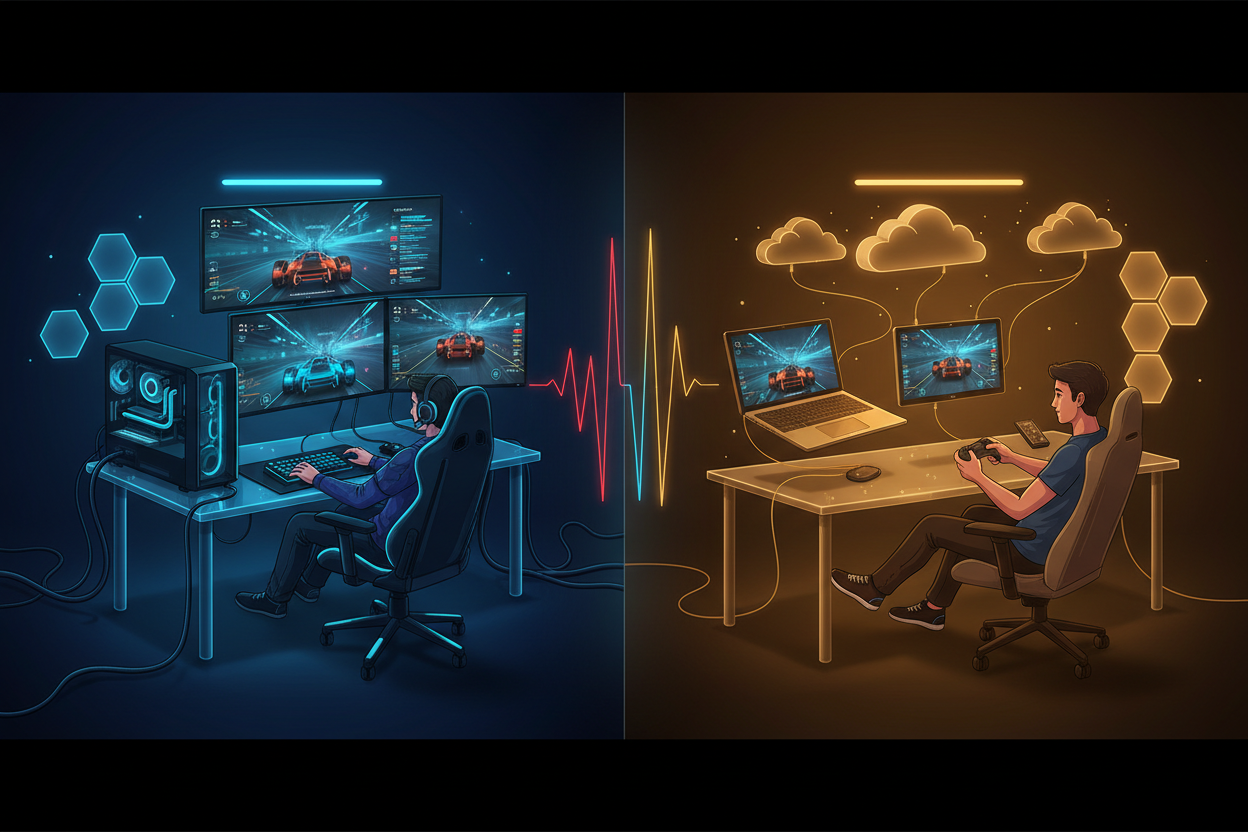
Cloud gaming in 2025 isn’t just about streaming games anymore – it’s about creating seamless, cross-platform experiences that would have seemed impossible just a few years ago. From lightning-fast 5G networks to AI-powered optimization, the technology has matured in ways that are reshaping the entire gaming industry. Let’s explore what’s making waves in the cloud gaming space this year and why it matters for every type of gamer out there.
Table of Contents 📋
• The Current State of Cloud Gaming Technology
• Major Platform Updates and New Players in 2025
• 5G and Edge Computing: Game-Changers for Latency
• AI Integration in Cloud Gaming Services
• Cross-Platform Gaming Revolution
• Mobile Cloud Gaming Dominance
• Subscription Models and Pricing Evolution
• Technical Challenges and Solutions
• The Future of Game Development for Cloud Platforms
• Frequently Asked Questions
The Current State of Cloud Gaming Technology in 2025 🚀
Cloud gaming has hit its stride in 2025, and the numbers speak for themselves. With over 180 million active cloud gaming users globally, we’re looking at a market that’s finally delivering on its promises. The technology has evolved beyond simple game streaming to encompass what industry experts are calling “gaming-as-a-service” ecosystems.
What’s particularly impressive is how the infrastructure has matured. Major cloud providers have invested billions in specialized gaming data centers, strategically positioned to minimize latency. These aren’t your typical server farms – they’re purpose-built gaming powerhouses equipped with the latest GPUs and custom silicon designed specifically for real-time game rendering and streaming.
The quality improvements are remarkable too. We’re now seeing consistent 4K streaming at 60fps with HDR support becoming the standard rather than the exception. Input lag, once the Achilles’ heel of cloud gaming, has been reduced to levels that even competitive esports players find acceptable for most genres.
Major Platform Updates and New Players in 2025 🎯
The competitive landscape has become incredibly dynamic this year. While established players like Xbox Cloud Gaming, GeForce NOW, and PlayStation Now continue to evolve, we’ve seen some surprising new entrants shake things up significantly.
Xbox Cloud Gaming has rolled out its “Instant Play” feature, allowing users to jump into games directly from social media links or web searches without any app downloads. It’s honestly quite seamless – you click a link, and within seconds you’re playing. They’ve also expanded their library to include over 500 games, with same-day releases for all Game Pass titles.
GeForce NOW has pivoted toward what they’re calling “Ultimate Gaming,” offering RTX 4090-equivalent performance in the cloud. Their new partnership with major game publishers has resolved many of the licensing issues that plagued earlier versions, making it a much more comprehensive gaming solution.
The surprise hit of 2025 has been Amazon’s Luna Evolution platform, which uses advanced AI to predict player behavior and pre-load game assets, resulting in virtually instantaneous loading times. Their integration with Twitch has created unique interactive streaming experiences that blur the lines between playing and watching games.
5G and Edge Computing: Game-Changers for Latency ⚡
Here’s where things get really exciting from a technical standpoint. The widespread rollout of 5G networks has been a absolute game-changer for mobile cloud gaming. We’re talking about latency reduction from 50-80ms down to 10-20ms in optimal conditions – that’s approaching the responsiveness of local gaming.
Edge computing has been the secret sauce behind these improvements. Instead of routing everything through distant data centers, game processing now happens at edge nodes located much closer to players. In major metropolitan areas, you might have an edge computing node within a few miles of your location, dramatically reducing the physical distance data needs to travel.
The implementation has been particularly impressive in urban areas. Cities like Seoul, Tokyo, and Los Angeles now have edge computing networks so dense that latency for cloud gaming often matches or even beats traditional console gaming when you factor in the time saved from not having to install or update games.
AI Integration in Cloud Gaming Services 🤖
Artificial intelligence has become deeply integrated into cloud gaming platforms in ways that most users don’t even realize. The technology is working behind the scenes to optimize everything from video compression to predictive loading of game assets.
One of the most impressive developments is adaptive streaming quality. AI algorithms now analyze your network conditions, device capabilities, and even your gameplay patterns to dynamically adjust streaming parameters. If you’re in an intense multiplayer match, the system might prioritize low latency over visual fidelity. During cinematic sequences, it automatically bumps up the visual quality.
Predictive caching has become incredibly sophisticated too. AI systems learn from millions of gameplay sessions to predict what areas of a game world players are likely to explore next, pre-loading those assets to reduce loading times. Some platforms report up to 70% faster loading times compared to traditional methods.
The personalization aspect is equally impressive. AI curates game recommendations not just based on what you’ve played, but on your play style, the time of day you typically game, and even your mood indicators derived from gameplay patterns. It’s surprisingly accurate and has helped many gamers discover titles they never would have considered otherwise.
Cross-Platform Gaming Revolution 🌐
Cross-platform gaming has evolved from a nice-to-have feature to an expected standard in 2025. Cloud gaming platforms have become the great unifiers, allowing seamless play between PC, console, mobile, and even smart TV users in the same game sessions.
What’s particularly exciting is the emergence of “platform-agnostic” games designed specifically for cloud gaming. These titles automatically adapt their control schemes, UI elements, and even gameplay mechanics based on what device you’re using. You might start a game on your phone during your commute, continue on your laptop at work, and finish on your TV at home, with the experience feeling native to each device.
Save synchronization has become virtually instantaneous across platforms. The days of waiting for cloud saves to sync are long gone – your progress follows you seamlessly wherever you go. Some platforms have even implemented “context switching,” where the game remembers not just your progress but your control preferences and UI settings for each device type.
Mobile Cloud Gaming Dominance 📱
Mobile devices have become the primary access point for cloud gaming in 2025, accounting for over 60% of all cloud gaming sessions. This shift has been driven by several factors, but the most significant has been the optimization of games specifically for mobile cloud gaming experiences.
The integration with mobile operating systems has become seamless. iOS and Android now treat cloud games almost identically to native apps, with proper integration into system notifications, screen time tracking, and parental controls. You can even use Siri or Google Assistant to launch cloud games with voice commands.
Battery optimization has been a major focus area. Modern cloud gaming apps use significantly less battery than they did even two years ago, thanks to more efficient streaming codecs and better hardware acceleration. Many users report being able to play demanding games for 4-5 hours on a single charge, which was unthinkable in the early days of mobile cloud gaming.
The controller ecosystem has exploded too. From clip-on controllers that transform your phone into a handheld gaming device to wireless controllers that automatically pair when you launch a cloud gaming app, the accessory market has matured significantly.
Subscription Models and Pricing Evolution 💰
The pricing landscape has become much more diverse and consumer-friendly in 2025. We’ve moved beyond simple monthly subscriptions to more flexible models that cater to different gaming habits and budgets.
Pay-per-hour models have gained traction among casual gamers who don’t want to commit to monthly subscriptions. These typically range from $2-5 per hour for premium gaming experiences, making them cost-effective for occasional players. Some platforms offer “gaming credits” that never expire, allowing users to build up playing time when it’s convenient.
Family plans have become standard, with most major platforms offering shared subscriptions that work across multiple devices and family members. These typically cost 50-70% more than individual plans but can serve up to 6 users simultaneously.
The most interesting development has been “dynamic pricing” based on demand and server capacity. During peak hours, some platforms charge premium rates but offer guaranteed performance levels. During off-peak times, prices drop significantly, encouraging users to game at less congested times.
Technical Challenges and Solutions 🔧
Despite all the progress, cloud gaming still faces some technical hurdles, though the solutions being implemented are increasingly sophisticated. Bandwidth requirements remain a concern for many users, particularly in areas with data caps or slower internet connections.
Adaptive bitrate streaming has become much more aggressive in addressing this challenge. Modern platforms can deliver playable experiences on connections as slow as 10 Mbps by dynamically adjusting resolution, frame rate, and compression levels. The visual quality might not be perfect, but the games remain fully playable.
Network stability issues are being tackled through redundant streaming paths. If your primary connection experiences issues, the system can automatically switch to alternative routing paths or even different data centers without interrupting your gaming session. Some platforms maintain multiple simultaneous connections to ensure uninterrupted gameplay.
Storage and bandwidth costs for providers have been reduced through more efficient compression algorithms and smarter content delivery networks. These savings are increasingly being passed on to consumers in the form of more competitive pricing and better service quality.
The Future of Game Development for Cloud Platforms 🎨
Game developers are increasingly designing titles with cloud gaming in mind from the ground up. This shift is creating entirely new categories of games that simply wouldn’t be possible with traditional gaming models.
Massively multiplayer experiences are becoming more ambitious, with some games supporting thousands of simultaneous players in shared worlds. The cloud infrastructure can dynamically allocate resources based on player density, ensuring smooth performance even during major in-game events.
Real-time collaborative gaming is emerging as a unique genre. These are games where multiple players can jump in and out of the same game session seamlessly, with the AI managing character handoffs and maintaining narrative continuity. It’s creating entirely new forms of social gaming experiences.
The integration of streaming and gaming continues to evolve. Some games now include built-in streaming tools that allow players to broadcast their gameplay with professional-quality overlays and effects, all processed in the cloud without impacting game performance.
Conclusion: Gaming Without Boundaries 🌟
As we look at the cloud gaming landscape in 2025, it’s clear that we’ve reached a tipping point. The technology has matured to the point where the experience often exceeds traditional gaming in terms of convenience and accessibility, while matching it in quality and performance.
The barriers that once limited cloud gaming – latency, visual quality, game library limitations, and cost – have been systematically addressed through technological innovation and infrastructure investment. What we’re left with is a gaming ecosystem that’s more accessible, more social, and more flexible than ever before.
For gamers, this evolution means unprecedented freedom. You’re no longer tied to expensive hardware upgrades, lengthy downloads, or being physically present at your gaming setup. Your entire game library follows you wherever you go, accessible from virtually any device with an internet connection.
The industry implications are equally significant. Game developers can now create experiences that scale dynamically based on available cloud resources, publishers can reach audiences who never would have invested in gaming hardware, and the barriers to entry for gaming have never been lower.
Looking ahead, it’s exciting to imagine what 2026 and beyond might bring. With continued improvements in network infrastructure, AI integration, and cross-platform experiences, cloud gaming isn’t just the future of gaming – it’s rapidly becoming the present. The evolution continues, and honestly, we’re just getting started. 🚀
Frequently Asked Questions ❓
Q: Do I need a high-end internet connection for cloud gaming in 2025?
A: While a faster connection provides a better experience, most modern cloud gaming platforms work well with 15-25 Mbps connections. Many services now offer adaptive streaming that adjusts quality based on your connection speed, making cloud gaming accessible even with modest internet speeds.
Q: How much does cloud gaming cost compared to traditional gaming?
A: Cloud gaming subscriptions typically range from $10-20 per month for premium services, which often includes access to hundreds of games. When you factor in the cost of hardware, game purchases, and upgrades, cloud gaming can be significantly more cost-effective, especially for casual to moderate gamers.
Q: Can I play the latest AAA games on cloud gaming platforms?
A: Yes, most major cloud gaming platforms now offer day-one access to new AAA releases. Many have partnerships with publishers to ensure new games are available simultaneously with their traditional releases, sometimes even offering early access to subscribers.
Q: Is cloud gaming suitable for competitive gaming?
A: With latency improvements in 2025, many competitive gamers find cloud gaming acceptable for most genres. While the most hardcore esports professionals might still prefer local gaming for tournament play, the latency difference has become minimal enough that most competitive gaming is perfectly viable in the cloud.
Q: What happens to my games if I cancel my cloud gaming subscription?
A: This depends on the platform, but most services allow you to keep games you’ve purchased separately from the subscription. However, games included with the subscription typically become inaccessible when you cancel, similar to other subscription services like Netflix or Spotify.