Slack Alternatives: Which Communication Tool Fits Your Team in 2025? 🚀
Remember when Slack revolutionized workplace communication back in 2013? Fast forward to 2025, and while Slack remains a powerhouse, it’s no longer the only game in town. Whether you’re dealing with budget constraints, seeking better integration options, or simply looking for features that align more closely with your team’s workflow, there’s a whole universe of communication tools waiting to be explored.
I’ve spent countless hours testing different platforms with various teams, from scrappy startups to enterprise giants, and let me tell you – the “one-size-fits-all” approach rarely works when it comes to team communication. Your remote design team might thrive with visual collaboration features, while your sales squad needs something that integrates seamlessly with their CRM.
In this comprehensive guide, we’ll dive deep into the most compelling Slack alternatives available in 2025, helping you find that perfect communication sweet spot for your unique team dynamics. 💬
Table of Contents
• Why Consider Slack Alternatives?
• Top Slack Alternatives for Different Team Needs
• Microsoft Teams: The Enterprise Favorite
• Discord: Beyond Gaming Communities
• Mattermost: Open Source Flexibility
• Rocket.Chat: Customization King
• Twist: Threaded Conversations Done Right
• Chanty: Simple and Affordable
• Key Features to Consider When Choosing
• Making the Switch: Implementation Tips
• Frequently Asked Questions
Why Consider Slack Alternatives in 2025? 🤔
Don’t get me wrong – Slack isn’t broken. But after working with dozens of teams over the years, I’ve noticed some recurring pain points that might sound familiar to you. The pricing can get steep as your team grows, especially when you factor in all those premium features that seem essential but aren’t included in the basic plan.
Then there’s the integration maze. While Slack boasts thousands of integrations, finding the right combination that doesn’t create notification chaos or workflow bottlenecks can feel like solving a puzzle with missing pieces. Some teams also struggle with Slack’s threading system, finding conversations get buried or fragmented across different channels.
Security-conscious organizations often bump up against limitations in data control and compliance features, particularly in regulated industries. And let’s be honest – some teams simply need something more straightforward without the bells and whistles that can overwhelm rather than enhance productivity.
Microsoft Teams: The Enterprise Favorite 🏢
If your organization already lives and breathes Microsoft 365, Teams feels like a natural extension of your digital workspace. I’ve watched entire companies migrate seamlessly because the integration with Outlook, SharePoint, and OneDrive creates this beautifully cohesive ecosystem.
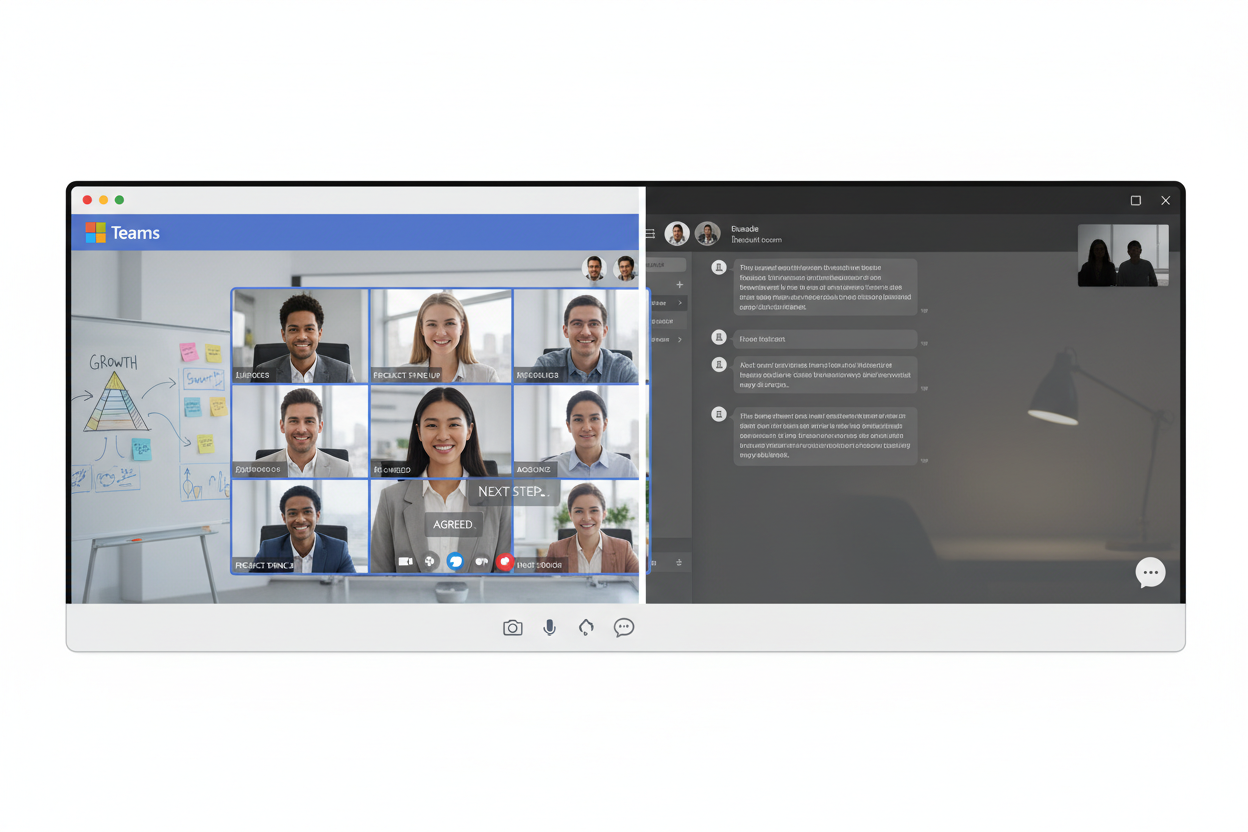
What really sets Teams apart is its video conferencing capabilities. While Slack treats video calls almost as an afterthought, Teams puts them front and center with features like background blur, live captions, and breakout rooms that actually work smoothly. The whiteboarding feature has become surprisingly robust, making it a solid choice for creative teams who need to brainstorm visually.
The downside? Teams can feel overwhelming if you’re coming from a simpler platform. The interface tries to do everything, which sometimes means it doesn’t do any one thing exceptionally well. Performance can also be sluggish, particularly on older devices or slower internet connections.
Discord: Beyond Gaming Communities 🎮
Here’s a plot twist that caught many by surprise – Discord has quietly become a legitimate business communication tool. Originally designed for gamers, its voice channels and community-building features translate beautifully to remote teams that value spontaneous collaboration.
What I love about Discord is how it handles voice communication. Unlike traditional conference calls that feel formal and scheduled, Discord’s voice channels create virtual “rooms” where team members can drop in and out naturally. It’s like having an open office environment in the digital world.
The threading system is also more intuitive than Slack’s, and the bot ecosystem offers some unique automation possibilities. Plus, the free tier is genuinely generous – perfect for smaller teams or organizations just starting their remote work journey.
However, Discord lacks some enterprise features like advanced security controls and detailed analytics. It’s also still fighting the perception that it’s “just for gamers,” which might not fly in more conservative business environments.
Mattermost: Open Source Flexibility 🔧
For teams that need complete control over their data and communication infrastructure, Mattermost offers something unique in the market – a truly self-hosted solution that doesn’t compromise on features. I’ve worked with several healthcare and financial services companies that chose Mattermost specifically because they could keep everything on their own servers.
The platform feels familiar if you’re coming from Slack, but with more customization options under the hood. You can modify the interface, create custom integrations, and even alter core functionality to match your specific workflows. The mobile apps are surprisingly polished for an open-source solution.
The trade-off is complexity. Setting up and maintaining a self-hosted Mattermost instance requires technical expertise that many teams don’t have in-house. Even their cloud offering requires more hands-on configuration compared to plug-and-play alternatives.
Rocket.Chat: Customization King 👑
Rocket.Chat strikes an interesting balance between the simplicity of hosted solutions and the flexibility of open-source platforms. What impressed me most during testing was how easily you can white-label the entire platform – perfect for agencies or consultants who want to provide communication tools under their own brand.
The real-time translation feature has been a game-changer for international teams I’ve worked with. Watching team members communicate seamlessly across language barriers feels almost magical. The platform also excels at handling large-scale deployments, with some installations supporting hundreds of thousands of users.
On the flip side, the user interface feels dated compared to more modern alternatives. The learning curve can be steep for non-technical users, and some advanced features require coding knowledge to implement effectively.
Twist: Threaded Conversations Done Right 🧵
Twist takes a radically different approach to team communication by organizing everything into threaded conversations from the ground up. Instead of the chaotic stream-of-consciousness style that dominates most chat platforms, every message belongs to a specific thread with a clear topic.
This structure has been revolutionary for teams that struggle with information overload. I’ve seen marketing teams use Twist to maintain focused discussions about specific campaigns without the usual drift into unrelated topics. The asynchronous nature also works beautifully for distributed teams across multiple time zones.
The limitation is that Twist feels restrictive if your team thrives on spontaneous, rapid-fire communication. It’s designed for thoughtful, organized discussions rather than quick back-and-forth exchanges. Some users also miss the social aspects that make other platforms feel more community-oriented.
Chanty: Simple and Affordable 💰
Sometimes the best solution is the simplest one. Chanty strips away the complexity that can bog down larger platforms while maintaining all the core features most teams actually use. The pricing is refreshingly straightforward – no confusing tiers or hidden costs that suddenly appear when you need basic functionality.
The task management integration feels natural rather than forced, allowing teams to convert messages into actionable items without switching between multiple tools. The voice messages feature has been surprisingly popular with teams that include members who prefer verbal communication over typing.
However, Chanty’s simplicity is also its weakness for teams that need advanced features like custom bots, extensive integrations, or sophisticated administrative controls. It’s perfect for small to medium teams but might feel limiting as organizations grow and requirements become more complex.
Key Features to Consider When Choosing 🔍
After helping dozens of teams navigate this decision, I’ve identified several critical factors that often determine long-term satisfaction with any communication platform. Security and compliance requirements should top your list, especially if you handle sensitive data or operate in regulated industries.
Integration capabilities matter more than you might initially think. That sleek platform might lose its appeal if it can’t talk to your project management tool, CRM, or file storage system. Consider not just what integrations exist today, but how the platform handles custom integrations and API access for future needs.
User experience consistency across devices is crucial in our mobile-first world. A platform that works beautifully on desktop but feels clunky on mobile will frustrate team members who need to stay connected on the go. Similarly, consider how the platform handles offline functionality and message synchronization.
Scalability planning often gets overlooked during initial evaluations. That affordable solution for your 10-person team might become prohibitively expensive or technically inadequate as you grow to 100 or 1000 users.
Making the Switch: Implementation Tips 🔄
Migrating from one communication platform to another requires more than just signing up for a new service. Start with a pilot group of enthusiastic early adopters who can help identify potential issues and become internal champions for the new platform.
Data migration deserves special attention. While you might not need to transfer every historical message, important conversations, files, and integrations should move over smoothly. Test the migration process thoroughly with a subset of data before committing to a full transfer.
Training and change management often determine whether a platform switch succeeds or fails. Even the most intuitive platform requires some adjustment period. Create simple guides, host training sessions, and designate platform experts who can help teammates navigate the transition.
Consider running both platforms in parallel for a short period rather than making an abrupt switch. This gives team members time to adapt while ensuring no critical communications get lost in the transition.
Conclusion: Finding Your Perfect Communication Match 🎯
Choosing the right communication platform for your team in 2025 isn’t about finding the most feature-rich option – it’s about identifying the tool that best supports your specific workflows, culture, and growth plans. Whether that’s Microsoft Teams’ enterprise integration, Discord’s community-building features, or Twist’s organized approach to conversations, the perfect solution is the one that disappears into the background and lets your team focus on what they do best.
Take time to involve your team in the evaluation process. After all, they’ll be the ones using it every day. Consider starting with free trials or pilot programs to test real-world usage before making long-term commitments. Remember, the best communication tool is the one your team actually wants to use. 🌟
Frequently Asked Questions ❓
How much does it typically cost to switch from Slack to an alternative?
The cost varies significantly depending on your chosen platform and migration complexity. Most alternatives offer free trials, and many have lower per-user pricing than Slack. Factor in potential setup time, training costs, and any custom integration development when calculating total switching costs.
Can I import my Slack conversation history to other platforms?
Most major alternatives offer some level of Slack import functionality, though the completeness varies. Direct messages, channel conversations, and files typically transfer well, but custom integrations and bots usually require reconfiguration.
Which Slack alternative works best for remote teams?
Discord and Microsoft Teams excel for remote teams due to their strong voice/video capabilities. Twist works well for asynchronous communication across time zones. The best choice depends on whether your team needs real-time collaboration or can work effectively with threaded, asynchronous communication.
Are open-source alternatives like Mattermost secure enough for enterprise use?
Yes, when properly configured and maintained. Open-source platforms often provide greater security transparency and control, but they require technical expertise to implement securely. Many enterprises choose them specifically for enhanced data control and compliance capabilities.
How long does it typically take to fully migrate to a new communication platform?
For small teams (under 20 people), expect 1-2 weeks for basic migration and adjustment. Larger organizations might need 4-8 weeks to complete data migration, integration setup, and team training. Running parallel platforms during transition can extend this timeline but reduces risk.