
Guides

slack alternatives
Guides, Resources, Reviews, SaaS, Software

Exploring the Best Slack Alternatives for 2025

Exploring the Best Slack Alternatives for 2025 As we step into 2025, the need for efficient communication tools is more crucial than ever. Slack has been a dominant player in this arena, but there are plenty of other contenders worth exploring. Whether you’re a startup looking for budget-friendly options or an enterprise seeking enhanced features, this guide will walk you through the best Slack alternatives for 2025. Let’s dive into the world of team collaboration tools and discover what suits your needs best! 🌐 Table of Contents 1. Introduction2. Why Consider Slack Alternatives? 🤔3. Top Slack Alternatives for 2025    a. Microsoft Teams    b. Zoom Team Chat    c. Google Chat    d. Discord    e. Rocket.Chat4. Conclusion5. FAQ Why Consider Slack Alternatives? 🤔 Before jumping into the alternatives, let’s address why you might want to consider options beyond Slack. While Slack offers a robust platform, some businesses find its pricing model prohibitive, especially for larger teams. Additionally, certain features, such as video conferencing or integration capabilities, might be more effectively handled by other platforms. Exploring alternatives can help you find a tool better aligned with your specific communication and budgetary needs. Top Slack Alternatives for 2025 a. Microsoft Teams Microsoft Teams continues to be a formidable contender in the communication tool space. Known for its deep integration with Microsoft 365, it allows seamless access to Office apps, making it ideal for businesses already entrenched in the Microsoft ecosystem. The platform excels in video conferencing, file sharing, and offers a user-friendly interface that simplifies collaboration. Plus, its security features are top-notch, ensuring your data remains protected. 🔐 b. Zoom Team Chat Zoom, synonymous with video meetings, has expanded its offerings with Zoom Team Chat. The platform provides an integrated solution for messaging, file sharing, and of course, video calls. Its user interface is intuitive, and it offers a free tier that’s perfect for small teams. With its advanced video conferencing capabilities, Zoom Team Chat is a strong alternative for businesses that prioritize face-to-face communication. 💬 c. Google Chat Formerly known as Hangouts Chat, Google Chat has evolved significantly to become a viable Slack alternative. Integrated with Google Workspace, it offers streamlined access to Google’s suite of productivity tools. Google Chat is especially beneficial for teams already using Gmail and other Google services, providing a seamless transition into a collaborative environment. Its smart suggestions and search capabilities make finding information a breeze. 📈 d. Discord Originally designed for gamers, Discord has grown into a powerful communication tool for businesses and communities alike. It offers voice, video, and text communication channels, all organized into easily navigable servers. Discord is free to use, with premium features available through Discord Nitro. Its customizable interface and robust community features make it an attractive option for teams that value flexibility and engagement. 🎮 e. Rocket.Chat Rocket.Chat is an open-source communication platform that offers tremendous customization options. It allows businesses to host their own servers, ensuring full control over data and security. Rocket.Chat supports video conferencing, screen sharing, and even live chat customer support. It’s a great choice for organizations that require a high degree of customization and privacy. 🚀 Conclusion As we move further into 2025, exploring Slack alternatives can open up new possibilities for team collaboration and communication. From Microsoft’s integration-rich Teams to the customizable Rocket.Chat, there’s a platform out there suited to your unique needs. By weighing the features, pricing, and compatibility of these tools, you can find the perfect fit for your organization, enhancing productivity and connectivity in the process. 🌟 FAQ 1. What is the main advantage of using Microsoft Teams over Slack? Microsoft Teams offers seamless integration with Microsoft 365 applications, making it an excellent choice for businesses already using Microsoft products. Its robust security features and video conferencing capabilities are also noteworthy. 2. Is Discord suitable for professional use? Absolutely! Although Discord started as a platform for gamers, its flexibility, robust communication features, and customization options make it suitable for professional and business use. 3. How does Google Chat integrate with other Google services? Google Chat integrates seamlessly with Google Workspace, allowing users to access Gmail, Google Drive, Calendar, and other Google services, enhancing productivity and collaboration across the board. 4. Can I use Zoom Team Chat for free? Yes, Zoom Team Chat offers a free tier that includes basic messaging and video conferencing capabilities, making it an accessible option for small teams. Check Out More On My Page Keywords best free cloud storage for photos 2025, best cloud storage apps 2025, best cloud backup solutions for small business 2025, best cloud gaming services 2025, hybrid cloud vs multi-cloud setup tutorial, AI-powered cloud operations automation 2025, cloud computing certifications for beginners, cloud migration tools comparison 2025, cloud storage vs NAS for home users, cheap cloud hosting providers 2025, best Slack alternatives 2025, Microsoft Teams vs Slack comparison 2025, Google Chat vs Slack integration 2025, Discord for business chat and collaboration 2025, Zoom chat vs Slack features 2025, best project management software 2025, best free project management software 2025, Asana vs Trello head-to-head 2025, ClickUp project management app 2025, free task management tools 2025 (Trello, Asana, etc.), best to do list apps 2025, Any.do task management app guide 2025, Google Tasks mobile app tutorial 2025, Todoist productivity app review 2025, best note-taking apps 2025, Evernote alternatives (Notion, OneNote) 2025, GIMP vs Photoshop image editing 2025, best code editor apps 2025, Visual Studio Code tutorials 2025, best free VPN apps 2025, best free PDF editor apps 2025, PDFGear vs Adobe Acrobat comparison 2025, best password managers 2025, open source office suite (LibreOffice) 2025, best Microsoft Office alternative 2025, file sharing apps 2025 (Google Drive, WeTransfer, etc.), Google Drive file sharing tips 2025, Lemon8 social media app 2025, Airchat voice-first social app 2025, eToro social trading platform guide 2025, TikTok content creation tips 2025, Instagram reels tutorial 2025, ChatGPT app usage and tips 2025, best AI productivity tools 2025 (Notion, ChatGPT, etc.), best AI transcription apps 2025 (Rev, Sonix, etc.), best photo editing apps for iPhone 2025, best video editing apps

Cloud Hosting
Apps, Cloud, Guides, Resources, Reviews, SaaS, Websites

Affordable Cloud Hosting Providers: Top Picks for 2025

Affordable Cloud Hosting Providers: Top Picks for 2025 The world of cloud hosting is ever-evolving, offering businesses and individuals scalable, flexible, and cost-effective solutions. As we approach 2025, it’s more important than ever to find the right provider that balances affordability with performance. In this blog post, we’ll explore some of the top affordable cloud hosting providers for 2025, helping you make an informed decision for your hosting needs. Table of Contents 1. Introduction 2. The Importance of Affordable Cloud Hosting 3. Top Affordable Cloud Hosting Providers for 2025 4. Key Features to Consider 5. Conclusion 6. FAQ The Importance of Affordable Cloud Hosting In today’s digital age, cloud hosting has become the backbone for many online services. From small businesses to large enterprises, the need for reliable and cost-effective hosting solutions is paramount. But what makes cloud hosting so appealing? 🤔 With cloud hosting, you can enjoy: 1. **Scalability**: Easily adjust your resources to meet fluctuating demands. 2. **Cost-Efficiency**: Pay for what you use, reducing unnecessary expenses. 3. **Reliability**: Benefit from minimal downtime and robust data security. Top Affordable Cloud Hosting Providers for 2025 After thorough research and user reviews, we’ve compiled a list of the most affordable cloud hosting providers that don’t compromise on quality. Let’s dive in! 🚀 1. DigitalOcean Known for its simplicity and developer-friendly approach, DigitalOcean offers a range of cloud services that are both affordable and efficient. With transparent pricing and a wide array of tools, it’s perfect for startups and developers. **Why Choose DigitalOcean?** – **Transparent Pricing**: No hidden fees, pay-as-you-go model. – **Developer Tools**: Access to a variety of APIs and open-source tools. – **Community Support**: A vast community with tutorials and resources. 2. Vultr Vultr is another budget-friendly option that provides high-performance SSD cloud servers. Their global footprint and easy-to-use platform make it a strong contender in the cloud hosting space. **Why Choose Vultr?** – **Global Availability**: Data centers across the globe for faster service. – **Customizable Plans**: Choose plans that suit your specific needs. – **Simple Management**: Intuitive control panel for easy management. 3. Linode Linode is celebrated for its robust infrastructure and customer support. It offers competitive pricing without sacrificing performance, making it ideal for businesses of all sizes. **Why Choose Linode?** – **Reliable Performance**: Consistent uptime and fast servers. – **Comprehensive Support**: 24/7 support to assist with technical issues. – **Flexible Plans**: A range of plans to fit different budgets. Key Features to Consider When choosing a cloud hosting provider, it’s essential to look beyond just the price. Here are some key features to consider: 1. **Uptime Guarantee**: Look for providers that offer a high uptime guarantee (99.9% or higher). 2. **Security Features**: Ensure robust security measures like firewalls, DDoS protection, and regular backups. 3. **Customer Support**: Reliable 24/7 customer support can save you in times of crisis. 4. **Ease of Use**: A user-friendly interface can make management much easier, especially for beginners. Conclusion Choosing an affordable cloud hosting provider is a crucial decision that can impact your business’s success. By considering the options and features outlined in this post, you can make a more informed choice. Whether you’re a small business owner or a developer, there’s a cloud hosting solution out there that fits your needs and budget. Happy hosting! 🌐 FAQ Q1: What is the most cost-effective cloud hosting provider for small businesses in 2025? A: DigitalOcean and Vultr are often recommended for small businesses due to their affordable pricing models and ease of use. Q2: How do I know if a cloud hosting provider is reliable? A: Look for providers with high uptime guarantees, positive user reviews, and robust security features. Q3: Can I switch cloud hosting providers if I’m not satisfied? A: Yes, most cloud hosting providers offer flexible contracts and migration support to help you switch if needed. Q4: Are there any hidden costs with cloud hosting? A: Always review the pricing model of a provider. Providers like DigitalOcean and Vultr are known for their transparency, but it’s a good practice to double-check. Q5: How important is customer support in choosing a cloud hosting provider? A: Very important. Reliable customer support can resolve issues quickly and save you from potential downtime. Check Out More On My Page Keywords best free cloud storage for photos 2025, best cloud storage apps 2025, best cloud backup solutions for small business 2025, best cloud gaming services 2025, hybrid cloud vs multi-cloud setup tutorial, AI-powered cloud operations automation 2025, cloud computing certifications for beginners, cloud migration tools comparison 2025, cloud storage vs NAS for home users, cheap cloud hosting providers 2025, best Slack alternatives 2025, Microsoft Teams vs Slack comparison 2025, Google Chat vs Slack integration 2025, Discord for business chat and collaboration 2025, Zoom chat vs Slack features 2025, best project management software 2025, best free project management software 2025, Asana vs Trello head-to-head 2025, ClickUp project management app 2025, free task management tools 2025 (Trello, Asana, etc.), best to do list apps 2025, Any.do task management app guide 2025, Google Tasks mobile app tutorial 2025, Todoist productivity app review 2025, best note-taking apps 2025, Evernote alternatives (Notion, OneNote) 2025, GIMP vs Photoshop image editing 2025, best code editor apps 2025, Visual Studio Code tutorials 2025, best free VPN apps 2025, best free PDF editor apps 2025, PDFGear vs Adobe Acrobat comparison 2025, best password managers 2025, open source office suite (LibreOffice) 2025, best Microsoft Office alternative 2025, file sharing apps 2025 (Google Drive, WeTransfer, etc.), Google Drive file sharing tips 2025, Lemon8 social media app 2025, Airchat voice-first social app 2025, eToro social trading platform guide 2025, TikTok content creation tips 2025, Instagram reels tutorial 2025, ChatGPT app usage and tips 2025, best AI productivity tools 2025 (Notion, ChatGPT, etc.), best AI transcription apps 2025 (Rev, Sonix, etc.), best photo editing apps for iPhone 2025, best video editing apps 2025 (mobile), best note-taking apps iPad 2025, best chatbots and AI assistants 2025 (Claude, Bard, etc.), Claude AI vs ChatGPT overview 2025, Zapier Agents for workflow
Cloud Storage vs NAS
Cloud, Guides, Resources, Reviews, SaaS

Cloud Storage vs NAS: Which is Best for Home Users in 2025?

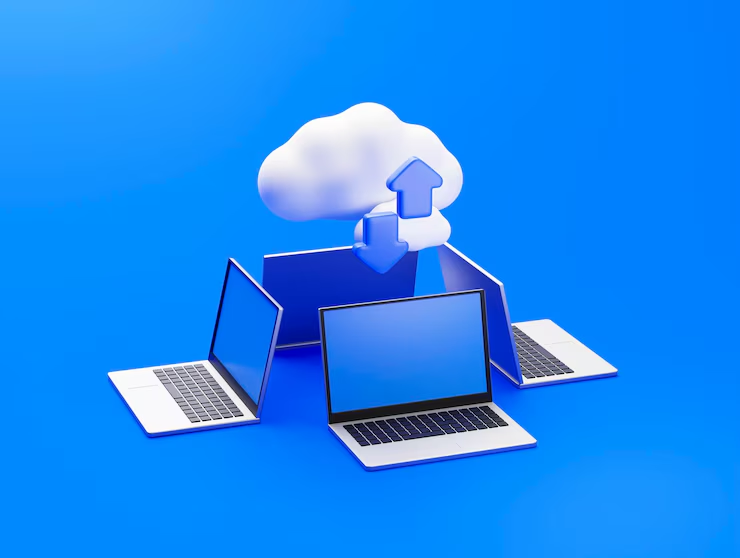
Cloud Storage vs NAS: Which is Best for Home Users in 2025? In today’s digital age, the way we store our data has evolved significantly. As we head into 2025, many home users are faced with the decision: should they utilize cloud storage or invest in a NAS (Network Attached Storage) system? Both options have their unique advantages and potential drawbacks. This blog post Cloud Storage vs NAS, will explore these two storage solutions to help you make an informed decision. Table of Contents 1. Introduction 2. What is Cloud Storage? 🌥️ 3. Understanding NAS: A Brief Overview 📦 4. Comparing Cloud Storage and NAS  a. Cost Considerations 💰  b. Security Features 🔒  c. Accessibility and Convenience 🌐  d. Storage Capacity and Scalability 📈 5. Conclusion 6. FAQs What is Cloud Storage? 🌥️ Cloud storage refers to storing data on remote servers that can be accessed via the internet. Companies like Google Drive, Dropbox, and iCloud provide cloud storage services where users can save their files in a virtual environment. This means you can access your documents, photos, and other data from anywhere, as long as you have an internet connection. Understanding NAS: A Brief Overview 📦 Network Attached Storage, or NAS, is a dedicated storage device that connects to your home network. It allows multiple users to store and retrieve data from a centralized location. Unlike cloud storage, NAS devices are physically present in your home, providing local storage that is accessible over your network. Comparing Cloud Storage vs NAS Cost Considerations 💰 When it comes to cost, cloud storage often starts at a lower price point, with many providers offering free tiers with limited storage. However, as your storage needs grow, subscription costs can add up. NAS, on the other hand, requires an upfront investment in hardware. Yet, once purchased, there are no recurring fees, making it potentially more cost-effective in the long run. Security Features 🔒 Security is a major concern for home users. Cloud storage providers typically offer robust security measures, including encryption and two-factor authentication. However, because your data is stored on external servers, it could be vulnerable to breaches. NAS offers greater control over your data security, as it’s stored locally. You can implement your own security protocols, although this requires some technical knowledge. Accessibility and Convenience 🌐 Cloud storage excels in accessibility. You can reach your data from any device with internet access. This is particularly useful for users who travel frequently or need to share files with others. NAS provides convenience too, but it’s primarily accessible within your local network. While remote access is possible, it requires additional setup and might not be as user-friendly. Storage Capacity and Scalability 📈 Cloud storage offers scalable options, allowing you to upgrade your plan as your storage needs increase. NAS devices, although limited by their physical capacity, can be expanded by adding more drives or upgrading existing ones. This makes NAS a flexible option for users who prefer managing their own hardware. Conclusion Deciding between cloud storage and NAS largely depends on your specific needs and preferences. If you prioritize accessibility and ease of use, cloud storage might be your best bet. However, if you prefer greater control over your data and are willing to invest in hardware, NAS could be the ideal solution. As we move into 2025, both options continue to evolve, offering innovative features to meet the growing demands of home users. FAQs Q1: Can I use both cloud storage and NAS together? A1: Absolutely! Many users opt for a hybrid approach, using cloud storage for its accessibility and NAS for secure, local backups. Q2: Is NAS difficult to set up for someone with limited tech experience? A2: While NAS setup can be a bit more technical than cloud storage, many modern NAS devices come with user-friendly interfaces and step-by-step guides to simplify the process. Q3: What happens to my cloud data if I stop paying for the service? A3: Typically, cloud providers retain your data for a certain period after your subscription lapses, giving you time to renew or download your files. However, it’s best to check the specific policy of your provider. Q4: Can I access my NAS files when I’m not at home? A4: Yes, with the right setup, you can access your NAS remotely. This might require configuring port forwarding on your router or using a VPN. Check Out More On My Page Keywords best free cloud storage for photos 2025, best cloud storage apps 2025, best cloud backup solutions for small business 2025, best cloud gaming services 2025, hybrid cloud vs multi-cloud setup tutorial, AI-powered cloud operations automation 2025, cloud computing certifications for beginners, cloud migration tools comparison 2025, cloud storage vs NAS for home users, cheap cloud hosting providers 2025, best Slack alternatives 2025, Microsoft Teams vs Slack comparison 2025, Google Chat vs Slack integration 2025, Discord for business chat and collaboration 2025, Zoom chat vs Slack features 2025, best project management software 2025, best free project management software 2025, Asana vs Trello head-to-head 2025, ClickUp project management app 2025, free task management tools 2025 (Trello, Asana, etc.), best to do list apps 2025, Any.do task management app guide 2025, Google Tasks mobile app tutorial 2025, Todoist productivity app review 2025, best note-taking apps 2025, Evernote alternatives (Notion, OneNote) 2025, GIMP vs Photoshop image editing 2025, best code editor apps 2025, Visual Studio Code tutorials 2025, best free VPN apps 2025, best free PDF editor apps 2025, PDFGear vs Adobe Acrobat comparison 2025, best password managers 2025, open source office suite (LibreOffice) 2025, best Microsoft Office alternative 2025, file sharing apps 2025 (Google Drive, WeTransfer, etc.), Google Drive file sharing tips 2025, Lemon8 social media app 2025, Airchat voice-first social app 2025, eToro social trading platform guide 2025, TikTok content creation tips 2025, Instagram reels tutorial 2025, ChatGPT app usage and tips 2025, best AI productivity tools 2025 (Notion, ChatGPT, etc.), best AI transcription apps 2025 (Rev, Sonix, etc.), best photo editing apps for iPhone

Cloud Migration
Apps, Cloud, Guides, Resources

Comparing Cloud Migration Tools: What to Expect in 2025

Comparing Cloud Migration Tools: What to Expect in 2025 As businesses continue to embrace digital transformation, cloud migration has become a crucial step in modernizing IT infrastructure. With numerous tools available, choosing the right one can feel overwhelming. In this post, we’ll explore the latest trends and expectations for cloud migration tools heading into 2025. Whether you’re a tech enthusiast or a business leader, understanding these tools can significantly impact your migration strategy. Table of Contents 1. Introduction to Cloud Migration Tools2. Key Features to Look For in 20253. Top Cloud Migration Tools: A Comparative Analysis4. Future Trends in Cloud Migration Tools5. Conclusion6. FAQs Introduction to Cloud Migration Tools Cloud migration tools are designed to streamline the process of moving data, applications, and workloads from on-premises infrastructure to the cloud. As we approach 2025, these tools are becoming more sophisticated, offering enhanced features to ensure a seamless transition. But with great power comes great responsibility—choosing the right tool is crucial for a successful migration. Key Features to Look For in 2025 As technology evolves, so do the features of cloud migration tools. Here are some key attributes to consider when selecting a tool in 2025: 1. Automation and AI Integration 🤖 Automation and artificial intelligence are revolutionizing cloud migration. Tools that leverage AI can predict potential issues, optimize resources, and automate redundant tasks, reducing human error and saving time. 2. Security and Compliance 🛡️ With increasing data breaches and stringent regulations, security is paramount. Look for tools that offer robust encryption, compliance checks, and seamless integration with your existing security protocols. 3. Cost Management 💰 Cloud migrations can be costly. Tools that provide cost analysis, budgeting features, and optimization suggestions can help manage expenses effectively, ensuring you get the most value from your investment. 4. Multi-Cloud Support ☁️☁️ As businesses adopt multi-cloud strategies, tools that support various cloud platforms (e.g., AWS, Azure, Google Cloud) offer flexibility and prevent vendor lock-in, enabling better resource allocation and management. Top Cloud Migration Tools: A Comparative Analysis With several tools available, choosing the right one requires understanding their strengths and weaknesses. Here’s a look at some of the top contenders in 2025: 1. AWS Migration Hub Amazon Web Services offers a centralized platform to track and manage migrations across AWS and other cloud providers. Its integration with AWS services and robust analytics make it a top choice for many enterprises. 2. Azure Migrate Microsoft’s Azure Migrate provides comprehensive support for migrating to Azure. It offers end-to-end visibility and guidance, making it ideal for businesses already integrated with Microsoft’s ecosystem. 3. Google Cloud Migrate Google’s tool is renowned for its ease of use and powerful AI-driven insights. It simplifies migration tasks and provides robust documentation, making it accessible for organizations of all sizes. 4. IBM Cloud Migration Services IBM offers tailored solutions for complex migration scenarios, emphasizing security and compliance. It’s particularly well-suited for industries with heavy regulatory requirements. Future Trends in Cloud Migration Tools As we look toward the future, several trends are shaping the landscape of cloud migration tools: 1. Increased Emphasis on Sustainability 🌱 With a growing focus on sustainability, tools that offer energy-efficient migration solutions and carbon footprint tracking will become increasingly popular. 2. Greater Customization Options 🎨 Businesses demand tools that cater to their unique needs. Expect more customizable migration solutions that allow for tailored workflows and integrations. 3. Enhanced Collaboration Features 🤝 As remote work continues to rise, tools that offer collaborative features, such as real-time data sharing and communication, will become essential. Conclusion Choosing the right cloud migration tool is critical for a successful digital transformation. As we move into 2025, tools are becoming more advanced, offering features that enhance automation, security, and cost management. By staying informed about these trends and tools, businesses can ensure a smooth migration process and unlock the full potential of the cloud. FAQs 1. Why is cloud migration important for businesses? Cloud migration is crucial as it enhances scalability, flexibility, and cost-efficiency, enabling businesses to innovate faster and respond to market changes more effectively. 2. How do I choose the right cloud migration tool? Consider factors such as your current infrastructure, the level of automation needed, security requirements, and budget constraints. Evaluating these will help you select a tool that aligns with your business goals. 3. What are the risks of cloud migration? Risks include data loss, downtime, and potential security breaches. Choosing a tool with strong security features and planning thoroughly can mitigate these risks. 4. Can I use multiple cloud providers during migration? Yes, multi-cloud strategies are becoming common, allowing businesses to leverage the strengths of different providers. Ensure your migration tool supports multi-cloud environments for seamless integration. 5. Is cloud migration cost-effective? While initial costs can be high, cloud migration often leads to long-term savings through reduced hardware expenses, improved efficiency, and scalability. Using tools with cost management features can further optimize your budget. Check Out More On My Page Keywords best free cloud storage for photos 2025, best cloud storage apps 2025, best cloud backup solutions for small business 2025, best cloud gaming services 2025, hybrid cloud vs multi-cloud setup tutorial, AI-powered cloud operations automation 2025, cloud computing certifications for beginners, cloud migration tools comparison 2025, cloud storage vs NAS for home users, cheap cloud hosting providers 2025, best Slack alternatives 2025, Microsoft Teams vs Slack comparison 2025, Google Chat vs Slack integration 2025, Discord for business chat and collaboration 2025, Zoom chat vs Slack features 2025, best project management software 2025, best free project management software 2025, Asana vs Trello head-to-head 2025, ClickUp project management app 2025, free task management tools 2025 (Trello, Asana, etc.), best to do list apps 2025, Any.do task management app guide 2025, Google Tasks mobile app tutorial 2025, Todoist productivity app review 2025, best note-taking apps 2025, Evernote alternatives (Notion, OneNote) 2025, GIMP vs Photoshop image editing 2025, best code editor apps 2025, Visual Studio Code tutorials 2025, best free VPN apps 2025, best free PDF editor apps 2025, PDFGear vs

Cloud Computing Certifications
Cloud, Guides, Resources, Reviews, SaaS, Tutorials

Beginner’s Guide to Cloud Computing Certifications in 2025

Beginner’s Guide to Cloud Computing Certifications in 2025 Welcome to the exciting world of cloud computing! As businesses continue to embrace digital transformation, cloud computing has become a cornerstone for innovation and efficiency. Whether you’re a tech enthusiast looking to start a career in IT or a seasoned professional seeking to upskill, understanding cloud computing certifications can open new doors for you. In this guide, we’ll explore the key certifications in 2025, helping you navigate your path to success. Table of Contents 📚 1. Introduction to Cloud Computing2. Why Certifications Matter3. Top Cloud Computing Certifications in 20254. How to Choose the Right Certification5. Preparing for Your Certification Exam6. Conclusion7. FAQs Introduction to Cloud Computing ☁️ Cloud computing is the delivery of computing services over the Internet, including servers, storage, databases, networking, software, analytics, and intelligence. It offers faster innovation, flexible resources, and economies of scale. With companies investing heavily in cloud technologies, the demand for skilled professionals is soaring. Why Certifications Matter 🎓 Certifications validate your skills and knowledge, showcasing your expertise to potential employers. In a competitive job market, a cloud computing certification can significantly enhance your resume, increase your earning potential, and provide you with the confidence to tackle complex cloud environments. Top Cloud Computing Certifications in 2025 🌟 Here’s a list of the most sought-after cloud computing certifications in 2025: 1. AWS Certified Solutions Architect – Associate Offered by Amazon Web Services, this certification is ideal for individuals who design distributed systems on AWS. It covers architectural principles and services like AWS databases, networking, storage, and more. 2. Microsoft Certified: Azure Fundamentals This certification is designed for those new to cloud services and how those services are provided with Microsoft Azure. It’s perfect for beginners aiming to understand the basics of cloud computing and its advantages. 3. Google Cloud Professional Cloud Architect Google Cloud’s certification focuses on designing, developing, and managing robust, secure, scalable, highly available, and dynamic solutions to drive business objectives. 4. CompTIA Cloud+ Vendor-neutral and ideal for cloud engineers, this certification emphasizes the skills needed to deploy and automate secure cloud environments that support high availability, ensuring business continuity. 5. Certified Kubernetes Administrator (CKA) As Kubernetes becomes integral to cloud infrastructure, this certification is crucial for those involved in cloud management or orchestration, offering insights into Kubernetes’ operations, networking, and security. How to Choose the Right Certification 🤔 Choosing the right certification depends on your career goals, current skills, and the specific cloud platform you’re interested in. Consider the following factors: – Career Path: Assess where you want to see yourself in the next few years.– Platform Preference: Decide whether you want to specialize in AWS, Azure, Google Cloud, or a combination.– Skill Level: Beginners might start with foundational certifications, while professionals can opt for advanced ones.– Industry Demand: Research the technologies and platforms that are most in demand in your industry. Preparing for Your Certification Exam 📘 Success in cloud certification exams requires thorough preparation. Here are some tips to help you ace your exam: – Study Resources: Utilize online courses, books, and practice exams.– Hands-On Practice: Gain practical experience through labs and real-world projects.– Join Study Groups: Interact with peers to share knowledge and exam strategies.– Time Management: Plan your study schedule and allocate time for each topic. Conclusion 🌈 Embarking on a journey to earn a cloud computing certification in 2025 is a wise investment in your future. With the right mix of knowledge, skills, and certifications, you can position yourself as a valuable asset in the tech industry. Remember, the cloud is not just a trend—it’s the future. Good luck on your cloud computing journey! FAQs 🙋‍♂️ 1. What is the best cloud computing certification for beginners? The Microsoft Certified: Azure Fundamentals is a great starting point for beginners, offering a solid understanding of cloud services and their benefits. 2. How long does it take to prepare for a cloud certification exam? The preparation time varies depending on your prior experience and the specific certification. On average, it can take between 2 to 3 months of consistent study. 3. Can I take cloud certification exams online? Yes, most cloud certification exams are available online, providing flexibility and convenience for candidates worldwide. 4. Do I need a computer science degree to get certified in cloud computing? No, a computer science degree is not necessary. However, a basic understanding of IT concepts and some technical knowledge can be beneficial. 5. Are cloud computing certifications worth it? Absolutely! Cloud computing certifications can significantly boost your career prospects, increase your earning potential, and keep you updated with the latest industry trends. Check Out More On My Page Keywords best free cloud storage for photos 2025, best cloud storage apps 2025, best cloud backup solutions for small business 2025, best cloud gaming services 2025, hybrid cloud vs multi-cloud setup tutorial, AI-powered cloud operations automation 2025, cloud computing certifications for beginners, cloud migration tools comparison 2025, cloud storage vs NAS for home users, cheap cloud hosting providers 2025, best Slack alternatives 2025, Microsoft Teams vs Slack comparison 2025, Google Chat vs Slack integration 2025, Discord for business chat and collaboration 2025, Zoom chat vs Slack features 2025, best project management software 2025, best free project management software 2025, Asana vs Trello head-to-head 2025, ClickUp project management app 2025, free task management tools 2025 (Trello, Asana, etc.), best to do list apps 2025, Any.do task management app guide 2025, Google Tasks mobile app tutorial 2025, Todoist productivity app review 2025, best note-taking apps 2025, Evernote alternatives (Notion, OneNote) 2025, GIMP vs Photoshop image editing 2025, best code editor apps 2025, Visual Studio Code tutorials 2025, best free VPN apps 2025, best free PDF editor apps 2025, PDFGear vs Adobe Acrobat comparison 2025, best password managers 2025, open source office suite (LibreOffice) 2025, best Microsoft Office alternative 2025, file sharing apps 2025 (Google Drive, WeTransfer, etc.), Google Drive file sharing tips 2025, Lemon8 social media app 2025, Airchat voice-first social app 2025, eToro social trading platform guide

Automation in Cloud
Cloud, Guides, Resources, Reviews, SaaS, Software, Websites

AI-Powered Automation in Cloud Operations: Trends to Watch in 2025

AI-Powered Automation in Cloud Operations: Trends to Watch in 2025 The world is rapidly evolving, and so is technology. As we venture into 2025, AI-powered automation in cloud operations is becoming a game-changer. From enhancing efficiency to reducing errors, AI is reshaping how businesses manage their cloud environments. In this blog post, we’ll explore the latest trends in AI-powered cloud automation that are set to revolutionize the industry. 🌐 Table of Contents 1. Introduction2. The Rise of AI in Cloud Operations3. Key Trends to Watch in 20254. Benefits of AI-Powered Automation5. Challenges and Considerations6. Conclusion7. FAQ Section The Rise of AI in Cloud Operations AI has been making waves across various industries, and cloud operations are no exception. The integration of AI into cloud services has enabled organizations to automate and optimize processes that were once manual and time-consuming. By leveraging AI, businesses can now manage their cloud infrastructure more efficiently, leading to cost savings and improved performance. 🚀 Key Trends to Watch in 2025 1. Enhanced Predictive Analytics 📊 Predictive analytics, powered by AI, is becoming more sophisticated. In 2025, expect AI algorithms to provide even more accurate forecasts by analyzing vast amounts of data. This will allow businesses to anticipate future trends, optimize resources, and make data-driven decisions with greater confidence. 2. Intelligent Security Measures 🔒 As cyber threats continue to evolve, AI will play a critical role in enhancing cloud security. AI-powered systems will detect anomalies and potential threats in real-time, providing an extra layer of protection against breaches. With AI, security measures will not only become more robust but also more adaptive to new threats. 3. Automated Resource Management ⚙️ Managing resources in the cloud can be complex, but AI is simplifying the process. Automated resource management tools will become more prevalent, allowing businesses to allocate and optimize resources dynamically. This will lead to better cost management and efficient use of cloud infrastructure. 4. AI-Driven DevOps Integration 🤖 DevOps is all about improving collaboration and efficiency in software development. In 2025, AI will further integrate into DevOps processes, automating tasks such as code testing, deployment, and monitoring. This will enable teams to deliver high-quality software faster and with fewer errors. 5. Personalized Cloud Solutions 🌟 With AI, cloud providers will offer more personalized solutions tailored to individual business needs. AI algorithms will analyze user behavior and preferences, allowing providers to offer customized services that enhance user experience and satisfaction. Benefits of AI-Powered Automation The benefits of AI-powered automation in cloud operations are vast. Here are some key advantages: 🌟 Improved Efficiency: Automating repetitive tasks frees up valuable time, allowing teams to focus on more strategic initiatives. 🔍 Reduced Errors: AI systems minimize human error, ensuring more reliable and accurate cloud operations. 💡 Cost Savings: By optimizing resource usage, businesses can significantly reduce their operational costs. 🚀 Scalability: AI-powered systems can easily scale to accommodate growing business needs without compromising performance. Challenges and Considerations While the benefits are numerous, implementing AI in cloud operations isn’t without challenges. Businesses must consider the following: 🔧 Data Privacy: Ensuring data privacy and compliance with regulations is paramount when deploying AI systems. 🤔 Complexity: Integrating AI into existing systems can be complex and may require specialized skills and knowledge. 📉 Potential Bias: AI algorithms can sometimes perpetuate existing biases, which could impact decision-making processes. Conclusion AI-powered automation in cloud operations is not just a trend—it’s the future. As we move into 2025, businesses that embrace these innovations will be better positioned to succeed in an increasingly competitive landscape. By understanding the trends and addressing the challenges, organizations can leverage AI to drive growth and transformation. 🌟 FAQ Section What is AI-powered automation in cloud operations? AI-powered automation in cloud operations refers to the use of artificial intelligence to automate and optimize cloud-related tasks and processes, improving efficiency and performance. How does AI enhance cloud security? AI enhances cloud security by detecting anomalies and potential threats in real-time, allowing for quick responses to protect against cyberattacks. What are the main benefits of using AI in cloud operations? The main benefits include improved efficiency, reduced errors, cost savings, and better scalability. Are there any challenges in implementing AI in cloud operations? Yes, challenges include ensuring data privacy, the complexity of integration, and addressing potential biases in AI algorithms. How can businesses prepare for AI trends in 2025? Businesses can prepare by staying informed about AI advancements, investing in training, and collaborating with experts to integrate AI into their operations effectively. Check Out More On My Page Keywords best free cloud storage for photos 2025, best cloud storage apps 2025, best cloud backup solutions for small business 2025, best cloud gaming services 2025, hybrid cloud vs multi-cloud setup tutorial, AI-powered cloud operations automation 2025, cloud computing certifications for beginners, cloud migration tools comparison 2025, cloud storage vs NAS for home users, cheap cloud hosting providers 2025, best Slack alternatives 2025, Microsoft Teams vs Slack comparison 2025, Google Chat vs Slack integration 2025, Discord for business chat and collaboration 2025, Zoom chat vs Slack features 2025, best project management software 2025, best free project management software 2025, Asana vs Trello head-to-head 2025, ClickUp project management app 2025, free task management tools 2025 (Trello, Asana, etc.), best to do list apps 2025, Any.do task management app guide 2025, Google Tasks mobile app tutorial 2025, Todoist productivity app review 2025, best note-taking apps 2025, Evernote alternatives (Notion, OneNote) 2025, GIMP vs Photoshop image editing 2025, best code editor apps 2025, Visual Studio Code tutorials 2025, best free VPN apps 2025, best free PDF editor apps 2025, PDFGear vs Adobe Acrobat comparison 2025, best password managers 2025, open source office suite (LibreOffice) 2025, best Microsoft Office alternative 2025, file sharing apps 2025 (Google Drive, WeTransfer, etc.), Google Drive file sharing tips 2025, Lemon8 social media app 2025, Airchat voice-first social app 2025, eToro social trading platform guide 2025, TikTok content creation tips 2025, Instagram reels tutorial 2025, ChatGPT app usage and tips 2025, best AI productivity tools

Cloud, Guides, How To, SaaS, Tutorials, Websites

Hybrid Cloud vs Multi-Cloud: A Step-by-Step Setup Tutorial

Hybrid Cloud vs Multi-Cloud: A Step-by-Step Setup Tutorial Welcome to the world of cloud computing! 🌥️ If you’re venturing into the realms of hybrid and multi-cloud solutions, you’ve come to the right place. This guide will walk you through the differences, benefits, and setup processes of both hybrid and multi-cloud environments. Whether you’re an IT manager or a curious tech enthusiast, this tutorial is designed to simplify your journey. Table of Contents 1. Introduction to Hybrid and Multi-Cloud2. Understanding the Differences3. Benefits of Each Approach4. Step-by-Step Setup Tutorial– Setting Up a Hybrid Cloud– Setting Up a Multi-Cloud5. Conclusion6. FAQ Section Introduction to Hybrid and Multi-Cloud In today’s fast-paced digital landscape, businesses are leveraging cloud technology like never before. The two popular approaches—hybrid cloud and multi-cloud—offer unique advantages. But what exactly are they? A hybrid cloud combines private and public cloud services, allowing data and applications to be shared between them. On the other hand, a multi-cloud approach involves using multiple cloud services from different providers to meet various business needs. Understanding the Differences At first glance, hybrid and multi-cloud might seem similar, but they serve different purposes: Hybrid Cloud: This model is ideal for businesses that require a mix of on-premises and cloud solutions. It offers more control over sensitive data and workloads, ensuring seamless interoperability between different environments. Multi-Cloud: This approach is perfect for organizations seeking to avoid vendor lock-in. By utilizing multiple cloud vendors, businesses can optimize performance and cost while improving redundancy and disaster recovery. Benefits of Each Approach Choosing between hybrid and multi-cloud depends largely on your business requirements. Here’s a quick breakdown of their benefits: Hybrid Cloud Benefits: ✔️ Enhanced Security: Keep sensitive data on private servers while taking advantage of the scalability of public clouds.✔️ Flexibility: Easily scale resources up or down based on demand.✔️ Cost Efficiency: Optimize costs by using public clouds for less sensitive workloads. Multi-Cloud Benefits: ✔️ Avoid Vendor Lock-In: Use the best services from different providers.✔️ Improved Performance: Select cloud services based on specific workload requirements.✔️ Increased Redundancy: Minimize downtime by spreading workloads across multiple clouds. Step-by-Step Setup Tutorial Setting Up a Hybrid Cloud Follow these steps to set up a hybrid cloud environment: Step 1: Assess Your Needs Before diving in, evaluate your current IT infrastructure and identify which applications and data need to remain on-premises and which can move to the cloud. Step 2: Choose the Right Providers Select a public cloud provider that complements your existing private infrastructure. Popular options include AWS, Microsoft Azure, and Google Cloud. Step 3: Implement Cloud Management Tools Utilize cloud management platforms to monitor and manage workloads across your hybrid environment. These tools help maintain consistency and security. Step 4: Migrate Workloads Gradually move your workloads to the cloud, ensuring minimal disruption to daily operations. Test thoroughly to ensure seamless integration between clouds. Setting Up a Multi-Cloud Here’s how you can set up a multi-cloud environment: Step 1: Define Your Strategy Identify the business objectives you aim to achieve with a multi-cloud approach. This could include better performance, cost savings, or disaster recovery. Step 2: Select Multiple Providers Choose a mix of cloud providers that best meet your strategic needs. Consider factors like pricing, features, and geographical availability. Step 3: Integrate Cloud Services Ensure that the different cloud services can communicate effectively. Use APIs and cloud service brokers to streamline integration. Step 4: Implement Monitoring Solutions Leverage monitoring tools to keep track of performance and costs across different clouds, ensuring optimal use of resources. Conclusion Deciding between a hybrid and multi-cloud setup can be daunting, but it ultimately boils down to your specific needs and goals. Both strategies offer flexibility and scalability, allowing your business to thrive in a competitive digital landscape. By following this guide, you are well on your way to unlocking the full potential of cloud computing! 🚀 FAQ Section Q1: Can I use both hybrid and multi-cloud strategies together? A: Absolutely! Many businesses use a combination of both to leverage the strengths of each approach. Q2: How do I ensure data security in a hybrid cloud? A: Implement strong encryption, access controls, and regularly audit your systems to maintain security. Q3: Is multi-cloud more expensive than hybrid cloud? A: Not necessarily. Costs depend on your cloud usage and provider pricing. Multi-cloud can be cost-effective if managed properly. Q4: What are the key challenges in setting up a multi-cloud environment? A: Integration, management complexity, and potential security issues are common challenges, but they can be mitigated with proper planning and tools. Q5: Can hybrid cloud improve disaster recovery? A: Yes, by utilizing both private and public clouds, businesses can enhance their disaster recovery strategies with greater flexibility and reliability. Check Out More On My Page Keywords best free cloud storage for photos 2025, best cloud storage apps 2025, best cloud backup solutions for small business 2025, best cloud gaming services 2025, hybrid cloud vs multi-cloud setup tutorial, AI-powered cloud operations automation 2025, cloud computing certifications for beginners, cloud migration tools comparison 2025, cloud storage vs NAS for home users, cheap cloud hosting providers 2025, best Slack alternatives 2025, Microsoft Teams vs Slack comparison 2025, Google Chat vs Slack integration 2025, Discord for business chat and collaboration 2025, Zoom chat vs Slack features 2025, best project management software 2025, best free project management software 2025, Asana vs Trello head-to-head 2025, ClickUp project management app 2025, free task management tools 2025 (Trello, Asana, etc.), best to do list apps 2025, Any.do task management app guide 2025, Google Tasks mobile app tutorial 2025, Todoist productivity app review 2025, best note-taking apps 2025, Evernote alternatives (Notion, OneNote) 2025, GIMP vs Photoshop image editing 2025, best code editor apps 2025, Visual Studio Code tutorials 2025, best free VPN apps 2025, best free PDF editor apps 2025, PDFGear vs Adobe Acrobat comparison 2025, best password managers 2025, open source office suite (LibreOffice) 2025, best Microsoft Office alternative 2025, file sharing apps 2025 (Google Drive, WeTransfer, etc.), Google Drive file sharing tips 2025, Lemon8 social

Cloud, Guides, Resources, SaaS, Software, Websites

Exploring the Top Cloud Gaming Services in 2025

Exploring the Top Cloud Gaming Services in 2025 Welcome to the future of gaming! As we step into 2025, cloud gaming has evolved dramatically, offering gamers unprecedented access to high-quality games without the need for expensive hardware. In this blog post, we’ll explore the leading cloud gaming services that are redefining the gaming landscape. So, grab your favorite gaming snack, and let’s dive in! 🎮 Table of Contents 1. Introduction to Cloud Gaming2. The Benefits of Cloud Gaming3. Top Cloud Gaming Services in 2025    3.1. Google Stadia    3.2. NVIDIA GeForce NOW    3.3. Xbox Cloud Gaming    3.4. Amazon Luna4. What’s Next for Cloud Gaming?5. Conclusion6. FAQs Introduction to Cloud Gaming In recent years, cloud gaming has transformed from a lofty idea into a mainstream reality. But what exactly is cloud gaming? Simply put, it’s a service that allows players to stream video games over the internet, eliminating the need for downloads, installations, or high-end gaming hardware. All you need is a reliable internet connection and a compatible device. Easy, right? The Benefits of Cloud Gaming Cloud gaming offers several compelling advantages: 🎯 **Cost-Effective:** No need to invest in pricey consoles or gaming PCs. Pay for what you play! 🌎 **Accessibility:** Play anywhere, anytime, on any device — whether it’s your TV, laptop, tablet, or even smartphone. 🚀 **Instant Play:** Forget the waits. With cloud gaming, you can start playing a game in seconds. 🔄 **Constant Updates:** Enjoy automatic updates and patches without lifting a finger. Top Cloud Gaming Services in 2025 3.1. Google Stadia Google Stadia has come a long way since its inception. With a robust library of games and seamless integration with YouTube Gaming, Stadia offers an immersive experience. Google’s commitment to improving latency and enriching its game catalog makes Stadia a top contender in the cloud gaming arena. 3.2. NVIDIA GeForce NOW Known for its stellar performance, NVIDIA GeForce NOW allows gamers to play their existing game libraries from platforms like Steam and Epic Games. The service offers both free and paid tiers, making it accessible to a wide range of gamers. NVIDIA’s proprietary technology ensures low latency and high-quality graphics, making it a favorite among graphic-intensive game lovers. 3.3. Xbox Cloud Gaming Formerly known as Project xCloud, Xbox Cloud Gaming is part of the Xbox Game Pass Ultimate package. It boasts a vast library of games and integrates perfectly with Xbox consoles and PCs. With Microsoft’s continued investment in cloud infrastructure, it’s no surprise that Xbox Cloud Gaming remains a powerhouse in 2025. 3.4. Amazon Luna Amazon Luna is steadily gaining traction with its channel-based model, allowing players to subscribe to different game packs. Luna’s integration with Twitch enhances the social aspect of gaming, offering streamers and viewers unique interaction opportunities. With Amazon’s formidable cloud infrastructure, Luna’s performance is top-notch. What’s Next for Cloud Gaming? The future of cloud gaming looks bright, with innovations on the horizon that promise to make gaming even more accessible and exciting. Expect advancements in VR and AR technologies, further reductions in latency, and perhaps even the introduction of AI-driven gaming experiences. The gaming industry is set to embrace an era where imagination is the only limit. 🌟 Conclusion As we explore the top cloud gaming services of 2025, it’s clear that the gaming industry is undergoing a significant transformation. With the convenience, flexibility, and innovation that cloud gaming offers, it’s an exciting time to be a gamer. Whether you’re a casual player or a hardcore enthusiast, there’s a cloud gaming service out there that’s perfect for you. Happy gaming! 🎉 FAQs 1. What do I need to get started with cloud gaming? All you need is a stable internet connection and a compatible device such as a smartphone, tablet, PC, or smart TV. 2. Do cloud gaming services offer free trials? Yes, many cloud gaming services like NVIDIA GeForce NOW and Amazon Luna offer free trials or free tiers to get you started. 3. Can I play my existing game library on cloud gaming platforms? Some platforms, like NVIDIA GeForce NOW, allow you to play games from your existing digital libraries on platforms like Steam and Epic Games. 4. Is cloud gaming suitable for competitive gaming? Cloud gaming technology has improved significantly, making it feasible for competitive gaming, but a robust internet connection is crucial for the best experience. 5. How does cloud gaming affect game updates and patches? One of the perks of cloud gaming is that updates and patches are managed by the service provider, ensuring you always have the latest version of the game without any hassle. Check Out More On My Page

Cloud Backup Solutions
Apps, Cloud, Guides, How To, Resources, Reviews, SaaS, Software, Tutorials, Websites

Best Useful Cloud Backup Solutions for Small Businesses in 2025

Best Cloud Backup Solutions for Small Businesses in 2025: A Comprehensive Review In the fast-paced digital age, safeguarding your business data is not just an option—it’s a necessity. As we dive into 2025, cloud backup solutions have become increasingly sophisticated, offering small businesses a robust safety net. Whether you’re running a startup or managing a seasoned company, choosing the right backup solution is critical. This comprehensive review will guide you through the best cloud backup options available for small businesses in 2025. Let’s explore the landscape of data protection and find the best fit for your needs. Table of Contents 1. Why Cloud Backup is Essential for Small Businesses2. Top Cloud Backup Solutions in 2025– Solution 1: BackBlaze– Solution 2: Acronis Cyber Protect– Solution 3: iDrive3. Choosing the Right Solution for Your Business4. Conclusion5. FAQ Why Cloud Backup is Essential for Small Businesses 🚀 In today’s digital landscape, small businesses face numerous challenges, from cyber threats to accidental data loss. Cloud backup solutions offer a reliable way to protect valuable data, ensuring business continuity even in the face of adversity. With automatic backups, secure encryption, and easy access from anywhere, cloud backup is a vital tool for any small business aiming to thrive in 2025. Top Cloud Backup Solutions in 2025 Solution 1: BackBlaze 🌥️ BackBlaze continues to lead the pack with its affordable and user-friendly approach to cloud backup. Known for its unlimited storage offering, BackBlaze is perfect for small businesses with large data needs. Its intuitive interface and reliable performance make it a favorite among users. In 2025, expect BackBlaze to enhance its security features and expand its global data centers, ensuring even faster and more secure backups. Solution 2: Acronis Cyber Protect 🔐 Acronis Cyber Protect merges backup with security, offering a comprehensive solution for small businesses. In 2025, Acronis stands out with its AI-powered anti-malware technology, ensuring that your data is not only backed up but also protected from threats. Its hybrid cloud architecture provides flexibility, allowing businesses to store data both locally and in the cloud. If security is a top priority, Acronis is a strong contender. Solution 3: iDrive 📦 iDrive is a robust solution that offers a mix of features tailored for small businesses. It provides a cost-effective way to manage backups with its competitive pricing structure. iDrive’s continuous file sync and multiple device backup capabilities make it an attractive option. In 2025, iDrive is set to enhance its data recovery speeds and user experience, making it a reliable choice for those looking for efficiency and value. Choosing the Right Solution for Your Business 🤔 Selecting the best cloud backup solution depends on several factors, including your business size, budget, and specific needs. Consider the following when making your choice: 1. Storage Needs: Assess the volume of data your business generates and choose a solution that offers sufficient storage. 2. Security Features: Prioritize solutions with strong encryption and comprehensive security measures. 3. User Experience: Opt for a platform that is easy to navigate and manage, reducing the burden on your team. 4. Cost: Balance your budget with the features offered, ensuring you get the best value for your investment. Conclusion In 2025, cloud backup solutions are more crucial than ever for small businesses looking to secure their data and ensure seamless operations. By considering your specific needs and exploring the top solutions like BackBlaze, Acronis Cyber Protect, and iDrive, you can make an informed decision that protects your business’s future. Remember, the right backup solution is not just about security—it’s about peace of mind. FAQ 🤓 Q1: How often should small businesses back up their data? It’s recommended that small businesses perform backups at least daily to ensure data integrity and minimize loss in case of an incident. Q2: Can cloud backup replace local backups completely? While cloud backups offer convenience and security, it’s wise to maintain local backups as part of a comprehensive data protection strategy. Q3: Are cloud backup solutions secure against cyber threats? Most cloud backup solutions offer strong encryption and security measures. However, it’s crucial to choose a provider with a proven track record in cybersecurity. Q4: What happens if my internet connection is slow? Many cloud backup solutions offer options to throttle bandwidth use and schedule backups during off-peak hours to mitigate the impact of slow internet connections. Q5: Is it easy to switch cloud backup providers? Switching providers can be straightforward, but it requires careful planning to ensure all data is transferred securely and without loss. Check Out More On My Page

The Ultimate Guide to Cloud Storage Apps for 2025
Apps, Cloud, Guides, How To, Resources, Reviews, SaaS, Software

The Ultimate Guide to Cloud Storage Apps for 2025

The Ultimate Guide to Cloud Storage Apps for 2025 Welcome to the future of digital storage! As we step into 2025, the way we store, share, and manage our data continues to evolve at a rapid pace. Whether you’re a student, a professional, or someone who just loves taking a lot of pictures, finding the right cloud storage app can make your life a whole lot easier. In this ultimate guide, we’ll explore the top cloud storage apps of 2025, what makes each one unique, and how you can choose the best option for your needs. 🚀 Table of Contents 1. Introduction to Cloud Storage in 20252. Top Features to Look for in Cloud Storage Apps3. Best Cloud Storage Apps of 2025– App 1: SkyVault– App 2: CloudHaven– App 3: NimbusNet4. Choosing the Right App for You5. Conclusion6. FAQs Introduction to Cloud Storage in 2025 Cloud storage has become an essential service for both personal and professional use. With the rise of remote work and the increasing digitalization of our lives, the demand for secure, reliable, and efficient cloud storage solutions has never been higher. In 2025, cloud storage apps are not only focusing on larger storage capacities but also on enhanced security features, seamless integration with other apps, and advanced AI-driven search capabilities. 🌐🔍 Top Features to Look for in Cloud Storage Apps When choosing a cloud storage app, it’s important to consider several key features that can significantly impact your user experience. Here are some must-haves for 2025: 1. Security and Privacy 🔒 With increasing concerns over data breaches, top-notch security features are non-negotiable. Look for apps that offer end-to-end encryption, two-factor authentication, and robust privacy policies. 2. Storage Capacity 📦 Depending on your needs, you’ll want a service that offers scalable storage options. Whether you’re storing documents, photos, or large video files, make sure your chosen app can accommodate your data. 3. Integration and Compatibility 🔗 Choose apps that seamlessly integrate with other tools you use daily, such as productivity suites, email services, or social media platforms. 4. User Interface and Experience 🖥️ A user-friendly interface can make all the difference. Look for apps with intuitive design and navigation to make your life easier. 5. AI-Powered Features 🤖 Advanced search, automated organization, and smart recommendations can save you time and enhance the way you use your storage. Best Cloud Storage Apps of 2025 App 1: SkyVault SkyVault has quickly become a favorite among users for its cutting-edge security features and vast storage options. Offering up to 10TB of storage, this app is perfect for heavy users who prioritize data security. Its AI-driven search function is incredibly powerful, helping you find files in seconds. Plus, its sleek design makes navigation a breeze. 🌟 App 2: CloudHaven CloudHaven stands out with its seamless integration capabilities. Whether you’re using Google Workspace, Microsoft Office, or any other major productivity suite, CloudHaven ensures a smooth transition and collaboration process. Its user-friendly interface is perfect for both tech-savvy and less tech-inclined users. Additionally, CloudHaven offers robust collaboration tools, making it ideal for teams. 🤝 App 3: NimbusNet NimbusNet is known for offering generous free storage options and a variety of customization features. It’s perfect for personal use, with excellent photo and video storage capabilities. NimbusNet also includes a unique feature—personalized storage suggestions based on your usage patterns, thanks to its AI-driven insights. 📷🎥 Choosing the Right App for You When selecting the right cloud storage app, consider what matters most to you. Are you prioritizing security, ease of use, or maybe the ability to collaborate effectively? Reflect on your personal or professional needs and match them with the features offered by each app. Consider trying out free trials to get a feel for the interface and functionality before making a decision. A little experimentation can lead to the perfect match! 🔍❤️ Conclusion In 2025, cloud storage apps are more advanced and user-friendly than ever before. Whether you need expansive storage for your professional life or a simple, secure place to store your personal memories, there’s a perfect app out there for you. By focusing on the features that matter most to you, you can find a service that will not only meet but exceed your expectations. Happy storing! 🌈✨ FAQs 1. What is the best cloud storage for security in 2025? SkyVault is highly recommended for its advanced security features, including end-to-end encryption and two-factor authentication. 2. Can I use cloud storage apps offline? Most cloud storage apps offer offline access to files downloaded on your device, but full functionality requires an internet connection. 3. How do AI features enhance cloud storage apps? AI features can improve search capabilities, automate file organization, and offer insights into storage usage, making them highly convenient and efficient. 4. Are there free cloud storage options available? Yes, NimbusNet offers generous free storage plans, making it a great choice for personal use without a financial commitment. 5. How do I know which cloud storage app is right for me? Evaluate your specific needs, such as storage capacity, security, and integration requirements, and consider trying free trials to see which app feels the most intuitive and useful for your workflow. Check Out More On My Page

Scroll to Top