AI-Powered Tools for Cloud Management and Security: Your Complete Guide 🚀
Table of Contents
• Introduction to AI-Driven Cloud Management
• The Current State of Cloud Security Challenges
• Top AI-Powered Cloud Management Tools in 2026
• Revolutionary AI Security Solutions for Cloud Infrastructure
• Benefits of Implementing AI in Cloud Operations
• Real-World Success Stories and Case Studies
• Future Trends and What’s Coming Next
• How to Choose the Right AI Tools for Your Business
• Frequently Asked Questions
• Conclusion
Introduction to AI-Driven Cloud Management 🌟
Remember when managing cloud infrastructure felt like trying to conduct an orchestra while blindfolded? Those days are rapidly becoming a distant memory. As we navigate through 2026, artificial intelligence has fundamentally transformed how we approach cloud management and security, turning what was once a complex juggling act into a streamlined, intelligent operation.

The cloud landscape has evolved dramatically over the past few years. What started as simple virtual servers has morphed into intricate ecosystems of microservices, containers, serverless functions, and multi-cloud deployments. Managing this complexity manually isn’t just challenging—it’s practically impossible at scale. That’s where AI steps in as our digital co-pilot, offering unprecedented visibility, automation, and security capabilities.
In this comprehensive guide, we’ll explore the cutting-edge AI-powered tools that are reshaping cloud management and security in 2026. Whether you’re a seasoned cloud architect or just beginning your cloud journey, you’ll discover practical insights and actionable strategies to leverage these powerful technologies.
The Current State of Cloud Security Challenges 🔒
Let’s be honest—cloud security keeps many of us awake at night. The threat landscape has become increasingly sophisticated, with cybercriminals leveraging AI themselves to launch more targeted and effective attacks. Traditional security approaches that worked in on-premises environments often fall short in dynamic cloud environments.
The statistics are sobering. According to recent industry reports, 95% of cloud security failures are due to customer misconfigurations, not provider vulnerabilities. This highlights a critical gap: the need for intelligent tools that can automatically detect and remediate security issues before they become costly breaches.
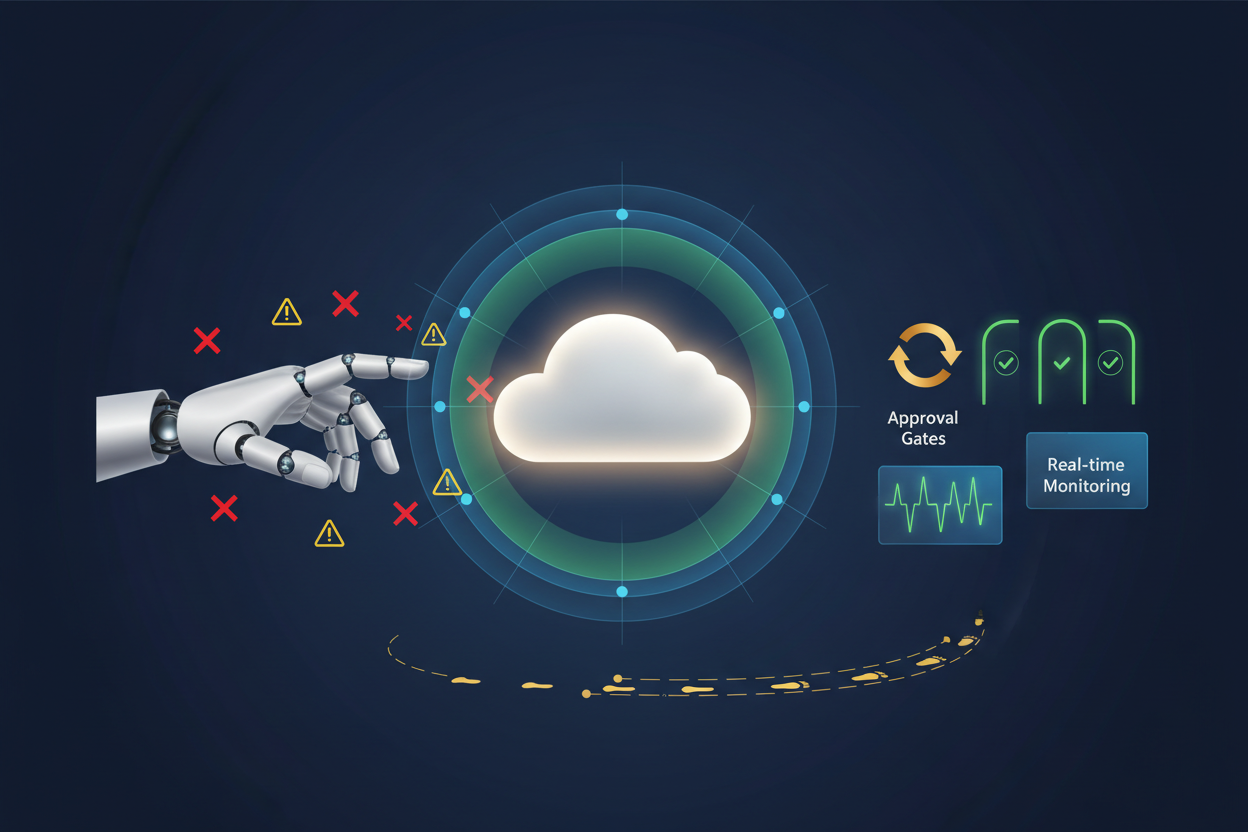
Modern cloud environments present unique challenges that make traditional security approaches inadequate. The ephemeral nature of cloud resources, the complexity of identity and access management across multiple services, and the sheer volume of security events generated daily create an overwhelming burden for human administrators.
Top AI-Powered Cloud Management Tools in 2026 🛠️
The market for AI-driven cloud management tools has exploded in 2026, offering solutions that seemed like science fiction just a few years ago. Let me walk you through some of the most impressive tools that are changing the game.
Autonomous Cloud Optimization Platforms have emerged as game-changers for cost management and performance optimization. These platforms continuously analyze your cloud usage patterns, predict future needs, and automatically adjust resources to optimize both performance and costs. What’s particularly exciting is their ability to learn from your specific workload patterns and make increasingly accurate predictions over time.
Intelligent Infrastructure as Code (IaC) Assistants represent another breakthrough in cloud management. These AI-powered tools can generate, review, and optimize infrastructure code based on best practices and your specific requirements. They’re like having a senior cloud architect available 24/7, ensuring your infrastructure deployments follow security and performance best practices.
Predictive Scaling Solutions have revolutionized how we handle traffic spikes and resource planning. Instead of reactive scaling that responds to load increases after they occur, these AI systems analyze historical data, external factors, and real-time signals to predict and prepare for demand changes before they impact your users.
Revolutionary AI Security Solutions for Cloud Infrastructure 🛡️
The security landscape in 2026 is dominated by AI-powered solutions that offer capabilities we could only dream of a few years ago. These tools don’t just detect threats—they understand context, predict attack vectors, and respond with surgical precision.
Behavioral Analytics and Anomaly Detection systems have become incredibly sophisticated. They establish baseline behaviors for users, applications, and systems, then use machine learning to identify subtle deviations that might indicate security threats. What’s remarkable is their ability to reduce false positives while catching sophisticated attacks that traditional signature-based systems miss.
Zero Trust Architecture Automation tools have made implementing zero trust security models practical for organizations of all sizes. These AI-powered platforms continuously verify every access request, automatically adjust permissions based on context and risk levels, and maintain detailed audit trails without requiring constant human intervention.
Threat Intelligence and Response Automation platforms aggregate threat data from multiple sources, correlate it with your specific environment, and automatically implement protective measures. They’re like having a team of security analysts working around the clock, processing millions of threat indicators and making split-second decisions to protect your infrastructure.
Benefits of Implementing AI in Cloud Operations 📈
The transformation that AI brings to cloud operations extends far beyond simple automation. I’ve witnessed firsthand how these tools can fundamentally change how organizations operate in the cloud, delivering benefits that compound over time.
Operational Efficiency improvements are often the most immediately visible benefit. AI-powered tools can handle routine tasks that previously consumed hours of human time—monitoring system health, optimizing resource allocation, and responding to common issues. This frees up your team to focus on strategic initiatives rather than firefighting.
Cost Optimization through AI is particularly impressive in 2026. Advanced algorithms can identify waste across complex multi-cloud environments, recommend rightsizing opportunities, and even negotiate better pricing through automated reserved instance management. Many organizations report 20-40% cost reductions within months of implementation.
Enhanced Security Posture is perhaps the most critical benefit. AI security tools provide continuous monitoring and response capabilities that human teams simply cannot match in terms of speed and scale. They can process and correlate security events across your entire infrastructure in real-time, identifying threats that might otherwise go unnoticed until it’s too late.
Real-World Success Stories and Case Studies 🌍
Let me share some compelling examples of how organizations are successfully leveraging AI-powered cloud tools in 2026. These stories illustrate the practical impact these technologies can have when implemented thoughtfully.
A global e-commerce company recently implemented an AI-powered cloud optimization platform that resulted in remarkable improvements. Within six months, they achieved a 35% reduction in cloud costs while simultaneously improving application performance by 25%. The AI system identified underutilized resources, optimized database queries, and automatically adjusted scaling policies based on traffic patterns.
A financial services firm deployed an AI-driven security platform that transformed their threat detection capabilities. The system reduced false positive alerts by 80% while identifying three sophisticated attack attempts that their previous tools had missed. Most impressively, the AI platform automatically implemented containment measures within seconds of detecting threats, preventing what could have been devastating breaches.
A healthcare organization used AI-powered compliance monitoring tools to maintain HIPAA compliance across their multi-cloud environment. The system continuously scans configurations, identifies potential compliance violations, and automatically implements remediation measures. This has reduced compliance audit preparation time from weeks to days while providing greater confidence in their security posture.
Future Trends and What’s Coming Next 🔮
Looking ahead, the evolution of AI-powered cloud tools shows no signs of slowing down. Several emerging trends are particularly exciting and will likely shape the landscape in the coming years.
Autonomous Cloud Operations represent the next frontier in cloud management. We’re moving toward fully self-managing cloud environments that can handle everything from capacity planning to security incident response without human intervention. While we’re not there yet, the progress in 2026 has been remarkable.
Quantum-Enhanced Security is beginning to emerge as quantum computing becomes more accessible. AI algorithms enhanced with quantum processing capabilities promise to revolutionize cryptography and threat detection, offering security capabilities that are theoretically unbreakable by classical computing methods.
Cross-Cloud Intelligence is becoming increasingly important as organizations adopt multi-cloud and hybrid strategies. AI tools that can provide unified visibility and management across different cloud providers are becoming essential for maintaining operational efficiency and security consistency.
How to Choose the Right AI Tools for Your Business 🎯
Selecting the right AI-powered cloud tools can feel overwhelming given the number of options available in 2026. However, a structured approach can help you make informed decisions that align with your specific needs and constraints.
Start with a Clear Assessment of your current challenges and objectives. Are you primarily concerned with cost optimization, security enhancement, or operational efficiency? Understanding your priorities will help you focus on tools that address your most pressing needs first.
Consider Integration Capabilities carefully. The best AI tools should seamlessly integrate with your existing cloud infrastructure and toolchain. Look for solutions that offer robust APIs, support for your preferred cloud providers, and compatibility with your current monitoring and management platforms.
Evaluate the Learning Curve and implementation requirements. While AI tools promise to simplify cloud management, they often require initial setup and configuration. Consider your team’s current skills and availability for training when selecting tools.
Plan for Scalability from the beginning. Choose tools that can grow with your organization and adapt to changing requirements. The AI capabilities that meet your needs today should also support your anticipated growth and evolution.
Frequently Asked Questions 🤔
Q: How much do AI-powered cloud management tools typically cost?
A: Pricing varies significantly based on the scope and complexity of the tools. Basic AI-powered monitoring and optimization tools might start at $500-1000 per month, while comprehensive enterprise platforms can range from $5,000-50,000+ monthly. However, most organizations find that the cost savings and efficiency gains justify the investment within 6-12 months.
Q: Can AI tools replace human cloud administrators entirely?
A: While AI tools are incredibly powerful, they work best as augmentation rather than replacement for human expertise. They excel at handling routine tasks, pattern recognition, and rapid response to known issues, but human oversight remains crucial for strategic decisions, complex problem-solving, and handling novel situations.
Q: How long does it take to see results from AI-powered cloud tools?
A: Most organizations begin seeing initial benefits within 2-4 weeks of implementation, with more significant improvements becoming apparent after 2-3 months as the AI systems learn your specific environment and patterns. Full optimization typically occurs within 6-12 months.
Q: Are AI cloud management tools secure themselves?
A: Reputable AI cloud management platforms implement robust security measures including encryption, secure APIs, and compliance with industry standards. However, it’s important to evaluate the security practices of any vendor and ensure they meet your organization’s security requirements.
Q: What happens if the AI makes a mistake?
A: Modern AI cloud management tools include safeguards such as rollback capabilities, approval workflows for critical changes, and monitoring systems that detect unexpected outcomes. Most platforms also provide detailed audit trails so you can understand and reverse any problematic actions.
Conclusion: Embracing the AI-Powered Cloud Future 🌈
As we’ve explored throughout this guide, AI-powered tools for cloud management and security in 2026 represent more than just technological advancement—they represent a fundamental shift in how we approach cloud operations. These tools are not just making our jobs easier; they’re enabling capabilities that were previously impossible at scale.
The organizations that are thriving in today’s complex cloud landscape are those that have embraced AI as a strategic enabler rather than just another tool in their toolkit. They’re using AI to transform their operations, enhance their security posture, and drive innovation at unprecedented speeds.
The key to success lies not in adopting every available AI tool, but in thoughtfully selecting and implementing solutions that align with your specific needs and objectives. Start small, focus on areas where you’ll see immediate impact, and gradually expand your AI capabilities as your team becomes more comfortable with these powerful technologies.
Remember, the goal isn’t to replace human expertise but to augment it with AI capabilities that can process information faster, identify patterns more accurately, and respond to threats more quickly than humanly possible. The future belongs to organizations that can effectively combine human insight with AI capabilities to create cloud operations that are more secure, efficient, and resilient than ever before.
As we look toward the rest of 2026 and beyond, one thing is clear: AI-powered cloud management and security tools will continue to evolve and improve. By starting your AI journey today, you’re not just solving current challenges—you’re positioning your organization to take advantage of even more powerful capabilities as they emerge. The future of cloud operations is intelligent, automated, and incredibly exciting. The question isn’t whether to embrace AI-powered cloud tools, but how quickly you can get started. 🚀